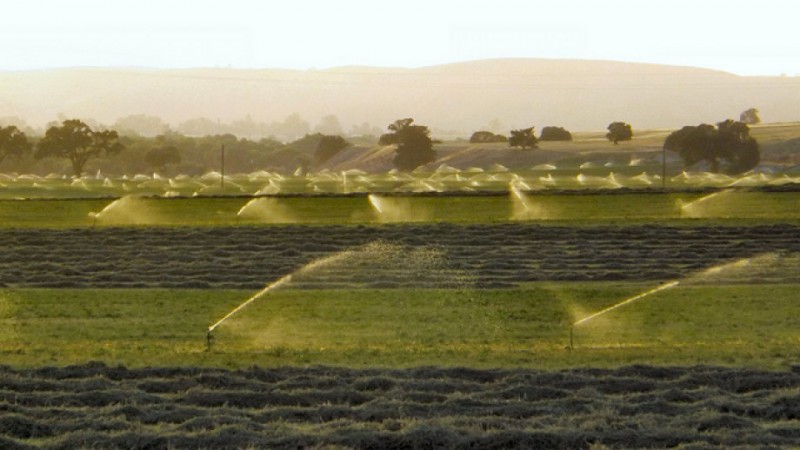
Image: Ken Figlioli, Flickr.
A new study led by The Australian National University (ANU) has found government policies around the world that aim to reduce water consumption through improved irrigation efficiency in agriculture may actually be having the opposite effect. Lead researcher, Professor Quentin Grafton of the ANU Crawford School of Public Policy, said the research shows increases in irrigation efficiency have actually reduced water availability, and increased water consumption in many countries. "Governments are pouring billions of dollars into making irrigation more efficient, with disastrous consequences for freshwater availability," Professor Grafton said. "If we want to avoid a global water crisis then decisive action needs to be taken now. "This is one of the greatest policy dilemmas of the world, how to reconcile increasing freshwater demands with finite freshwater resources." "Irrigation accounts for 70 per cent of global water extractions. This means understanding how increases in irrigation efficiency affect water availability is critical to solving the world's water problems." The research found increases in irrigation efficiency may result in greater on-farm water consumption, groundwater extractions and even water consumption per hectare. This occurs because of increased water use by existing crops and a switch to more water-intensive crops which can provide greater economic benefits from controlled water usage.
TO READ THIS ARTICLE, CREATE YOUR ACCOUNT
And extend your reading, free of charge and with no commitment.