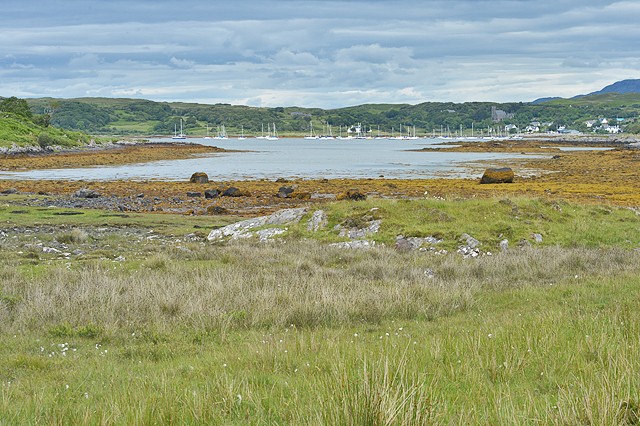
Looking down Saideil Torr a’ Bheithe, near to Arisaig, Highland, Great Britain (Copyright CC BY-SA 2.0 Nigel Brown)
Marshlands in the south east of England could start to disappear from the year 2040 due to rapid sea level rise, according to new research involving Durham University scientists. Using data from more than 800 sediment cores which record how salt marshes responded to variable rates of sea-level rise over the past 10,000 years, the researchers estimate that marshes in the south east of England could start to disappear from the year 2040, and across all of Great Britain by 2100. The ongoing effect of removal of ice at the end of the last Ice Age means most of Scotland is rising and southern England is subsiding, explaining the difference in timescales. Storm protection The study, published , shows that rising sea levels over the last 10,000 years led to increased waterlogging of the salt marshes, killing the vegetation that protects them from erosion and resulting in the marshes retreating landwards naturally. Salt marshes are coastal wetlands that are flooded and drained by salt water brought in by the tides and can be found along the British coast. They are crucial for ecosystems, as a filter for pollutants in the water and as a biodiversity area. Salt marshes also protect coastal areas from erosion by acting as a buffer for waves in storms and reducing flooding by slowing and absorbing rainwater.
TO READ THIS ARTICLE, CREATE YOUR ACCOUNT
And extend your reading, free of charge and with no commitment.