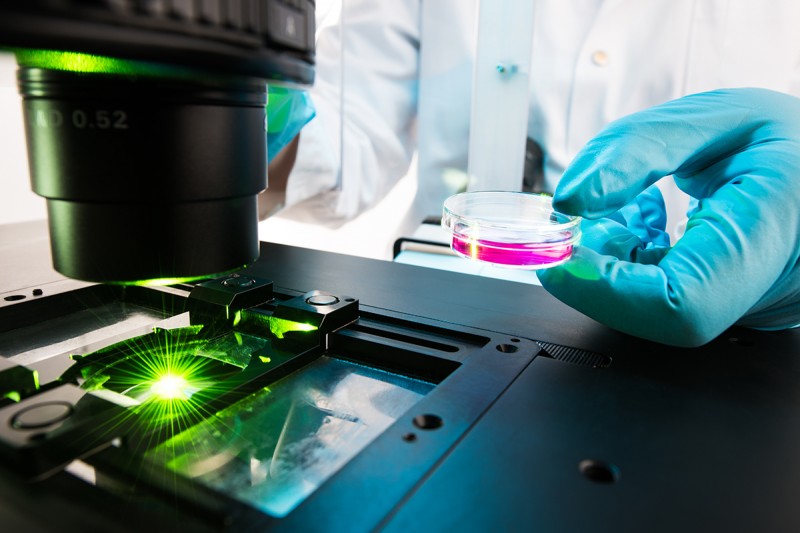
 Analysis of DNA repair mechanisms in cells using fluorescent microscopy.
An international research team under the co-direction of the University of Bern and the Netherlands Cancer Institute (NKI) has discovered various mechanisms of resistance to cancer therapy. The findings help researchers to understand the self-repair of cancer cells after a therapy and thus help to fight resistant tumours more efficiently. The DNA in our cells is constantly subjected to damage, caused in particular by the cells' normal metabolism. Current estimates assume up to 70,000 impairments per cell per day. Healthy cells can repair this damage, however, using the proteins BRCA1 and BRCA2, for example. If they are defective though, this leads to an increased number of DNA mutations, which can cause cancer. Damage to these two repair proteins is associated above all with the occurrence of breast and ovarian cancer.
TO READ THIS ARTICLE, CREATE YOUR ACCOUNT
And extend your reading, free of charge and with no commitment.
Your Benefits
- Access to all content
- Receive newsmails for news and jobs
- Post ads