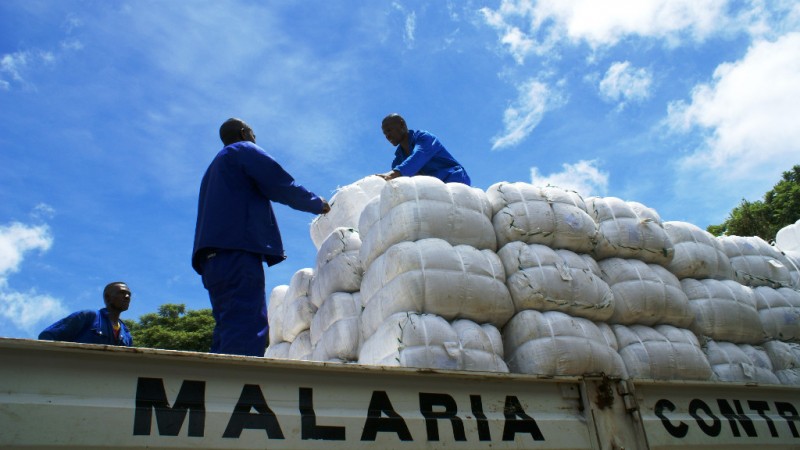
Study finds that combination nets are a better choice for tackling malaria in areas where mosquitoes are resistant to the single chemical used in traditional bed nets. (Photo: Todd Jennings for Swiss Malaria Group)
A new type of bed net with two active ingredients, a pyrethroid insecticide plus an insect growth hormone, could prevent millions of cases of malaria according to a new study published yesterday in The Lancet. Swiss TPH contributed to the study through statistical design and data analysis. The latest figures from the World Health Organisation (WHO) show that approximately 216 million people were infected with malaria in 2016 worldwide, an increase in five million from the previous year. 445,000 people died of the infectious disease in 2016 with the majority being children under the age of five in the poorest parts of sub-Saharan Africa. In several areas in sub-Saharan Africa, mosquitoes have become resistant to the single chemical used in traditional bed nets. This is also the case in Burkina Faso with more than 10 million cases annually. A two-year clinical trial in Burkina Faso involving 2,000 children was the first study to compare a new type of mosquito net with two active ingredients, a pyrethroid insecticide plus an insect growth hormone, to a traditional net treated with a pyrethroid alone.
TO READ THIS ARTICLE, CREATE YOUR ACCOUNT
And extend your reading, free of charge and with no commitment.