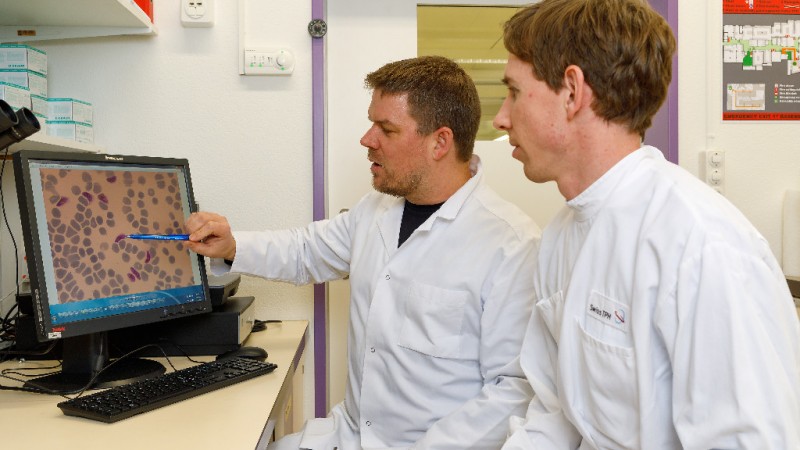
Understanding how malaria parasites control the switch to gametocyte production is fundamental to ultimately interrupt transmission of the disease. (Photo: Joachim Pelikan / Swiss TPH)
Researchers at Swiss TPH made an important step toward deeper understanding of how malaria blood stage parasites turn the switch to become transmissible to other humans. This knowledge is fundamental for future research aiming to interrupt malaria transmission. The results will be published on Friday 16 March 2018 in the multidisciplinary journal Science. Malaria parasites multiply asexually in the human bloodstream, thereby causing chronic infection and all the complications associated with this devastating disease. During each round of multiplication, a small proportion of parasites develop into non-dividing gametocytes instead. Gametocytes are infectious to mosquitoes and are therefore the catalyst for transmitting malaria to other humans. Understanding how malaria parasites control the switch to gametocyte production is central to support the development of therapeutic interventions that could block malaria transmission.
TO READ THIS ARTICLE, CREATE YOUR ACCOUNT
And extend your reading, free of charge and with no commitment.