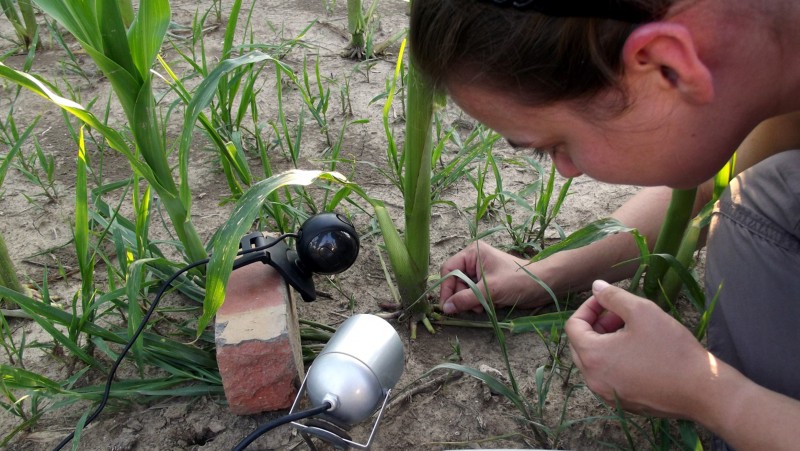
 One Health is examining how environmental changes are influencing microbial communities and consequently the health of soil, plants, animals and humans.
Research at the University of Bern is being intensified: Networking projects from different subject areas are being supported with three new Interfaculty Research Cooperations IRC. The projects deal with the health of environment, animals and humans, with religious conflicts and with sleep. The University of Bern strikes a new path in research funding: With the Interfaculty Research Cooperations IRC, it is launching networking projects, each of which involves 8 to 13 research groups from different faculties and which are being specifically funded. At least two faculties must be involved in each IRC. "Complex problem areas such as migration or genetic modifications on humans can no longer be resolved within individual disciplines, but only in an interdisciplinary manner", Rector Christian Leumann says. "The University of Bern is in an ideal position for these new, interdisciplinary research approaches as a comprehensive university thanks to its broad academic profile." With the instrument of the IRC, the University of Bern is strengthening the scientific quality and topicality of its research. "We are thus enhancing our profile as a research-intensive university", Leumann says.
TO READ THIS ARTICLE, CREATE YOUR ACCOUNT
And extend your reading, free of charge and with no commitment.
Your Benefits
- Access to all content
- Receive newsmails for news and jobs
- Post ads