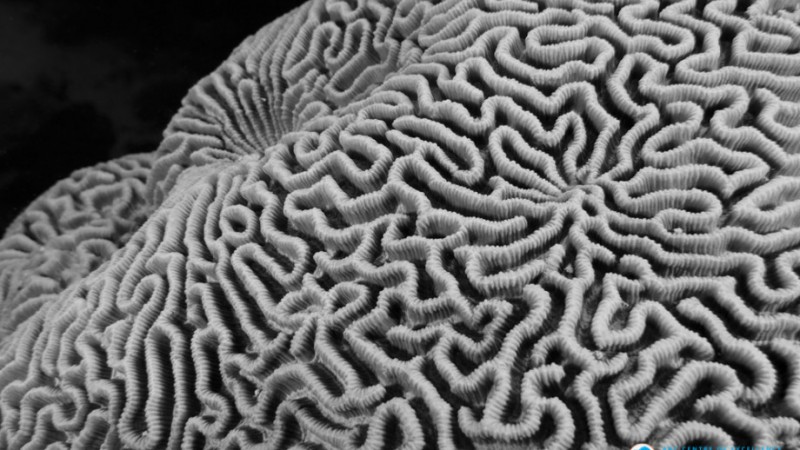
New research has found robust corals, including this brain coral (Leptoria), may be more resilient, at least in the short term, to bleaching. Credit: ARC CoE for Coral Reef Studies/ Christopher Brunner
A study led by ANU and James Cook University has found that robust reef-building corals are the only known animals to make an amino acid that could make them less susceptible than other corals to bleaching and climate change. Amino acids, the building blocks of life, are crucial for repairing tissue or growing new tissue. Corals can be divided into two major groupings: robust and complex. Using advanced genomic techniques, the research team found that the robust group, which includes several brain and mushroom corals, shares a key physiological advantage over complex corals. Dr Hua Ying from ANU and Professor David Miller from the ARC Centre of Excellence for Coral Reef Studies at James Cook University led the study, which was supported by the Great Barrier Reef Foundation and Bioplatforms Australia. "Our study found that robust corals possess a unique capacity to generate the essential amino acid, histidine, which appears to help these corals cope with the effects of climate change," said Dr Ying from the ANU Research School of Biology. Generating amino acids is costly for animals, so they usually only generate 11 of the 20 required for life.
TO READ THIS ARTICLE, CREATE YOUR ACCOUNT
And extend your reading, free of charge and with no commitment.