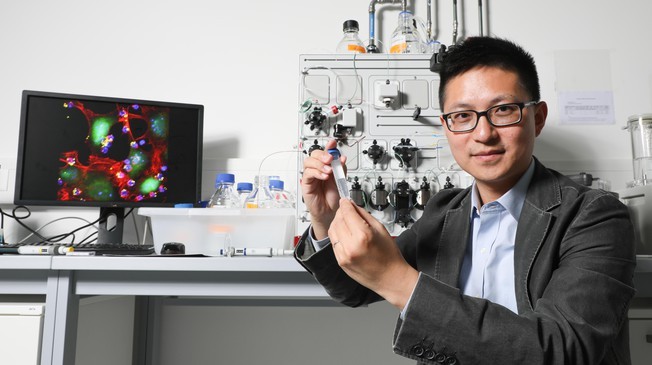
 Li Tang© Alain Herzog / 2018 EPFL
MIT and EPFL researchers have developed a highly targeted and non-toxic method for battling cancer through immunotherapy. Their nanoparticle gel acts only on immune cells surrounding the tumor, without affecting the rest of the body. Immunotherapy is a highly promising and innovative approach to battling cancer that works by enlisting the body's natural defenses to attack cancer cells. By stimulating T lymphocytes, which play a key role in the human immune system, cancer researchers have already achieved unparalleled results in treating cases of leukemia and certain types of melanoma - a common form of skin cancer. However, these treatments often raise problems of toxicity for the rest of the body and can have serious side effects. The MIT and EPFL researchers addressed this challenge by developing a nanoparticle gel that can be used to control exactly where and when drugs designed to boost the immune cells are applied. Their method is more effective at stimulating the body's defenses and ensures that the drug acts only on the cancer tissue, without harming the rest of the body. This study, part of which was carried out at MIT, and another part at EPFL's School of Engineering, has been published . It will be featured on the cover of the journal. Two patents covering the inventions have been licensed, and their method will soon be tested on patients by Torque, a firm based in Cambridge, Massachusetts. Arming the cells that defend the body
TO READ THIS ARTICLE, CREATE YOUR ACCOUNT
And extend your reading, free of charge and with no commitment.
Your Benefits
- Access to all content
- Receive newsmails for news and jobs
- Post ads