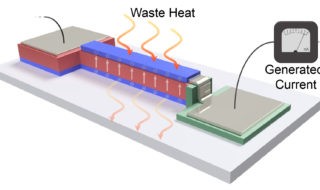
This illustration of the thin film device shows how the system converts waste heat into energy (Illustration by Shishir Pandya).
Nearly 70 percent of the energy produced in the United States each year is wasted as heat. Much of that heat is less than 100 degrees Celsius and emanates from things like computers, cars or large industrial processes. Engineers at the University of California, Berkeley, have developed a thin-film system that can be applied to sources of waste heat like these to produce energy at levels unprecedented for this kind of technology. The thin-film system uses a process called pyroelectric energy conversion, which the engineers' new study demonstrates is well suited for tapping into waste-heat energy supplies below 100 degrees Celsius, called low-quality waste heat. Pyroelectric energy conversion, like many systems that turn heat into energy, works best using thermodynamic cycles, kind of like how a car engine works. But unlike the engine in your car, pyroelectric energy conversion can be realized entirely in the solid state with no moving parts as it turns waste heat into electricity. The new results suggest that this nanoscopic thin-film technology might be particularly attractive for installing on and harvesting waste heat from high-speed electronics but could have a large scope of applications.
TO READ THIS ARTICLE, CREATE YOUR ACCOUNT
And extend your reading, free of charge and with no commitment.