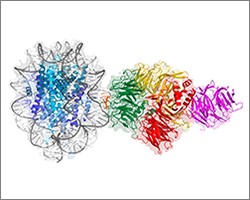
Cryo-EM map of a molecule of UV-DDB (right) binding to DNA wrapped around a histone (left)
May 30, 2019 UV light damages the DNA of skin cells, which can lead to skin cancer. But this process is counteracted by the DNA repair machinery, acting as a molecular sunscreen. It has been unclear, however, how repair proteins work on DNA tightly packed in chromatin, where access to DNA damage is restricted by protein packaging. Using cryo electron microscopy, researchers from the Thomä group have identified a new mechanism whereby repair proteins detect and bind to damaged DNA that is densely packed in nucleosomes. Ultraviolet (UV) light damages DNA, producing small lesions. These UV lesions are first detected by a protein complex known as UV-DDB and - once the lesions have been identified - the rest of the DNA repair machinery swings into action. The question is, how can UV-DDB bind to lesions when the DNA is coiled around the histone protein core of the so-called nucleosome (the basic unit of chromatin - the DNA packaging of eukaryotic chromosomes)? To gain access, UV-DDB was previously thought to require the assistance of additional proteins that shift the nucleosome.
TO READ THIS ARTICLE, CREATE YOUR ACCOUNT
And extend your reading, free of charge and with no commitment.