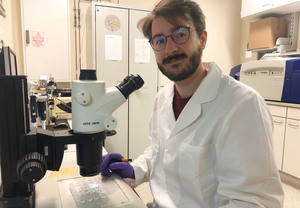
First author Rabe von Pappenheim examines protein crystals of a bacterial enzyme that was ’poisoned’ with an antivitamin. Photo: Lisa-Marie Funk
First author Rabe von Pappenheim examines protein crystals of a bacterial enzyme that was 'poisoned' with an antivitamin. Photo: Lisa-Marie Funk Research team from University of Göttingen develops drug approach against bacterial infections Antibiotics are among the most important discoveries of modern medicine and have saved millions of lives since the discovery of penicillin almost 100 years ago. Many diseases caused by bacterial infections - such as pneumonia, meningitis or septicaemia - are successfully treated with antibiotics. However, bacteria can develop resistance to antibiotics which then leaves doctors struggling to find effective treatments. Particularly problematic are pathogens which develop multi-drug resistance and are unaffected by most antibiotics. This leads to severe disease progression in affected patients, often with a fatal outcome. Scientists all over the world are therefore engaged in the search for new antibiotics.
TO READ THIS ARTICLE, CREATE YOUR ACCOUNT
And extend your reading, free of charge and with no commitment.