Crystal structure of the CIA targeting complex provides insights into Fe-S protein biogenesis
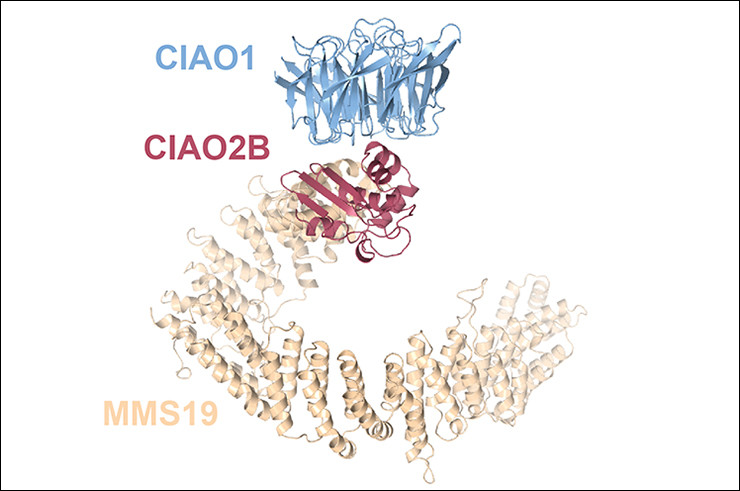
Crystal structure of the CIA targeting complex provides insights into Fe-S protein biogenesis - The cytosolic iron sulfur assembly (CIA) pathway is required for the insertion of Fe-S clusters into proteins, including many DNA replication and repair factors. Despite its essential cellular function, this pathway remains enigmatic. A new integrative structural and biochemical study from the Thomä group now provides detailed insights into the mechanisms of Fe-S protein biogenesis. Iron-sulfur (Fe-S) clusters are small inorganic protein cofactors, which are important for protein stability and functionality. The most well known examples of Fe-S proteins are found in the respiratory chain of mitochondria. Fe-S clusters are also present in proteins involved in DNA replication and repair, and mutations in the Fe-S domains of DNA repair proteins are associated with hereditary disorders such as Trichothiodystrophy and Fanconi Anemia. The biogenesis of cytosolic and nuclear Fe-S proteins depends on a complex pathway known as the cytosolic iron sulfur assembly (CIA) pathway.
TO READ THIS ARTICLE, CREATE YOUR ACCOUNT
And extend your reading, free of charge and with no commitment.