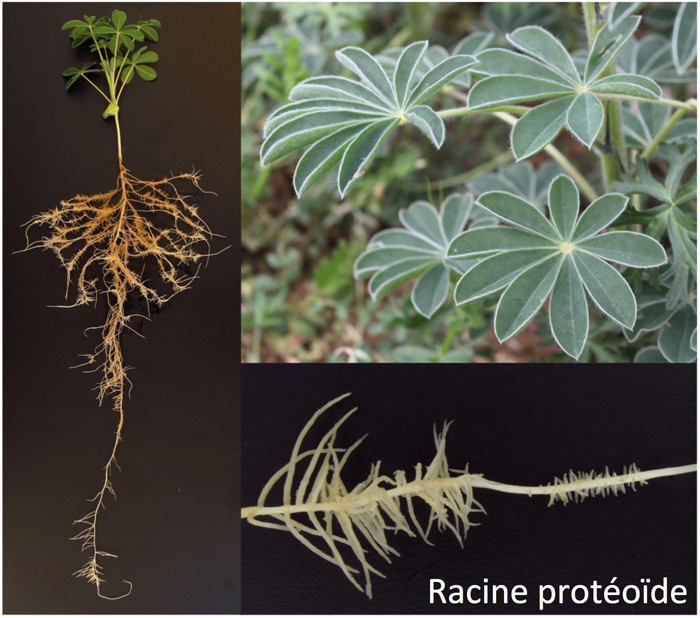
 White lupin has a root system that is highly adapted for poor soils thanks to its proteoid or cluster roots, which allow it to extract phosphate from the soil very effectively. The mapping of its genome represents a major step toward understanding this mechanism.
White lupin has a root system that is highly adapted for poor soils thanks to its proteoid or cluster roots, which allow it to extract phosphate from the soil very effectively. The mapping of its genome represents a major step toward understanding this mechanism. Benjamin Péret/CNRS - White lupin is a particularly abstemious crop, requiring very little fertiliser and producing high-protein seeds of great nutritive quality. The plant has just yielded the secrets of its genome thanks to the collaboration of eleven French and foreign laboratories coordinated by Benjamin Péret, a CNRS researcher at the Biochimie et physiologie moléculaire des plantes laboratory (CNRS/Inrae/Université de Montpellier/Montpellier SupAgro). Lupin has the distinctive feature of possessing "proteoid" or cluster roots, which enable it to solubilise phosphate and extract it efficiently. However, similar to petroleum, stocks of this vital component are limited and currently being depleted. Knowing the plant's genome could accelerate programmes for lupin selection and help make this legume a major asset in future plant-based protein production.
TO READ THIS ARTICLE, CREATE YOUR ACCOUNT
And extend your reading, free of charge and with no commitment.
Your Benefits
- Access to all content
- Receive newsmails for news and jobs
- Post ads