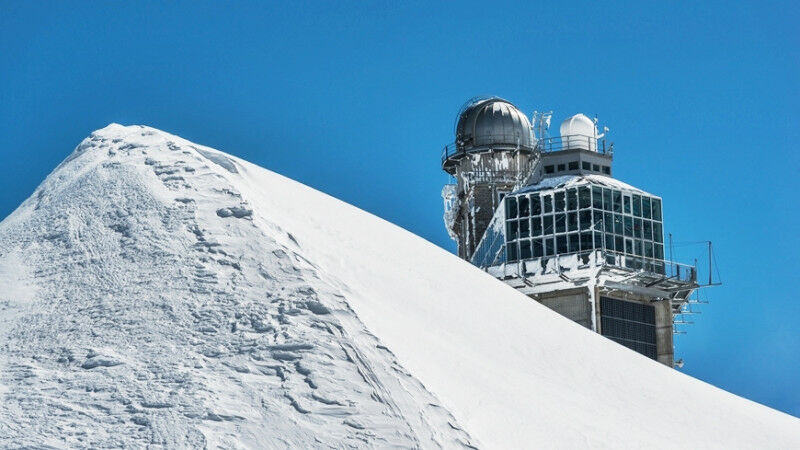
The high altitude research station Jungfraujoch (3580 m a.s.l.) is situated on a mountain saddle in the central Swiss Alps. It is one of the measurement stations within the international research network AGAGE. Image: Pixabay
The high altitude research station Jungfraujoch (3580 m a.s.l.) is situated on a mountain saddle in the central Swiss Alps. It is one of the measurement stations within the international research network AGAGE. Image: Pixabay - After a mysterious and sharp increase between 2012 and 2017 that could be traced to eastern China global emissions of a potent (and banned) substance notorious for depleting the Earth's ozone layer - the protective barrier that absorbs the Sun's harmful UV rays - have fallen rapidly in recent years and are now as low as never before since measurements began in this region in 2008, according to new atmospheric analyses published in "Nature" today. Two international studies of a consortium including more than a dozen institutions the world over, including Empa, published today show levels of CFC-11 emissions, one of many chlorofluorocarbon (CFC) chemicals once widely used in refrigerators and insulating foams, are back on the decline - less than two years after their shock resurgence in the wake of suspected rogue production in eastern China was widely publicized. "The findings are very welcome news and hopefully mark an end to a disturbing period of apparent regulatory breaches", says Luke Western from the University of Bristol, a co-lead author of one of the studies. "If the emissions had stayed at the significantly elevated levels we found, there could have been a delay, possibly of many years, in ozone layer recovery.
TO READ THIS ARTICLE, CREATE YOUR ACCOUNT
And extend your reading, free of charge and with no commitment.