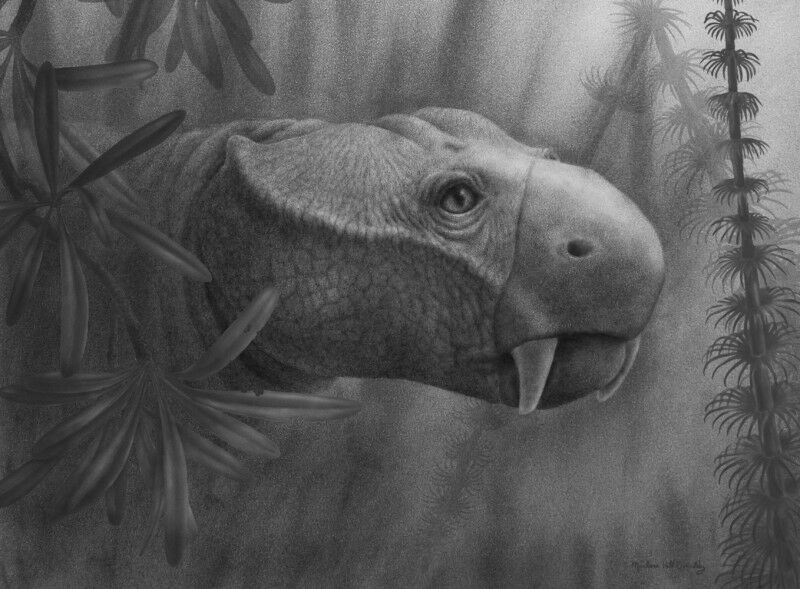
Life reconstruction of the the dicynodont Dicynodon. Aside from the tusks in the upper jaw, most dicynodonts possessed a turtle-like beak that they used to chew their food. Marlene Hill Donnelly
Life reconstruction of the the dicynodont Dicynodon. Aside from the tusks in the upper jaw, most dicynodonts possessed a turtle-like beak that they used to chew their food. Marlene Hill Donnelly Many animals have tusks, from elephants to walruses to hyraxes. But one thing today's tusked animals have in common is that they're all mammals - no known fish, reptiles or birds have them. But that was not always the case. In a study published Oct. 27 in the Proceedings of the Royal Society B, a team of paleontologists at Harvard University, the Field Museum, the University of Washington and Idaho State University traced the first tusks back to ancient mammal relatives that lived before the dinosaurs.
TO READ THIS ARTICLE, CREATE YOUR ACCOUNT
And extend your reading, free of charge and with no commitment.