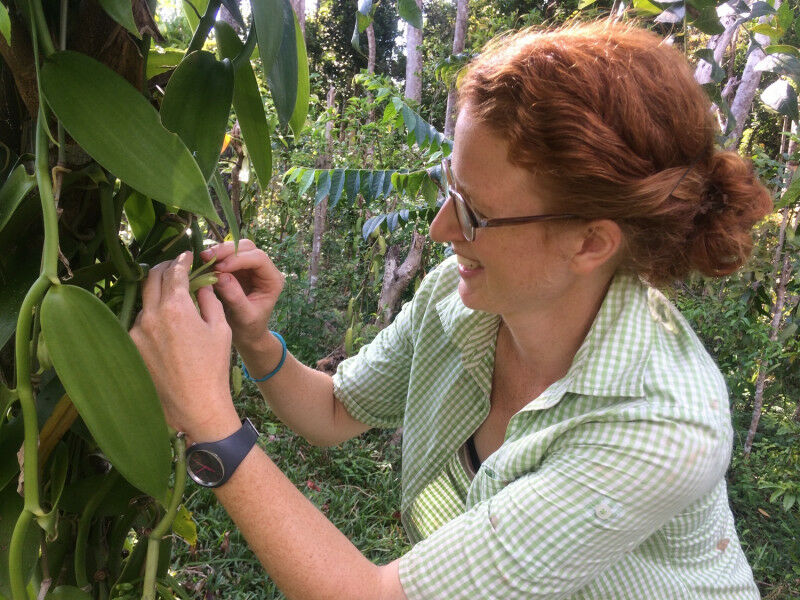
Annemarie Wurz hand-pollinates a vanilla flower in Madagascar. Photo: Anjaharinony A.N.A. Rakotomalala
Annemarie Wurz hand-pollinates a vanilla flower in Madagascar. Photo: Anjaharinony A.N.A. Rakotomalala Research team at the Universities of Göttingen and Hohenheim analyses use in worldwide commercial cultivation Pollinators - such as bees, butterflies and birds - are essential for agricultural production. However, natural pollination can also fail or be insufficient, which can lead to lower yields and poorer quality. This means alternative solutions are needed. Hand pollination, in which pollen is applied manually or mechanically to the flower, can supplement or replace pollination by animals. Researchers from the Universities of Göttingen and Hohenheim now present the first systematic review of hand pollination of food crops.
TO READ THIS ARTICLE, CREATE YOUR ACCOUNT
And extend your reading, free of charge and with no commitment.