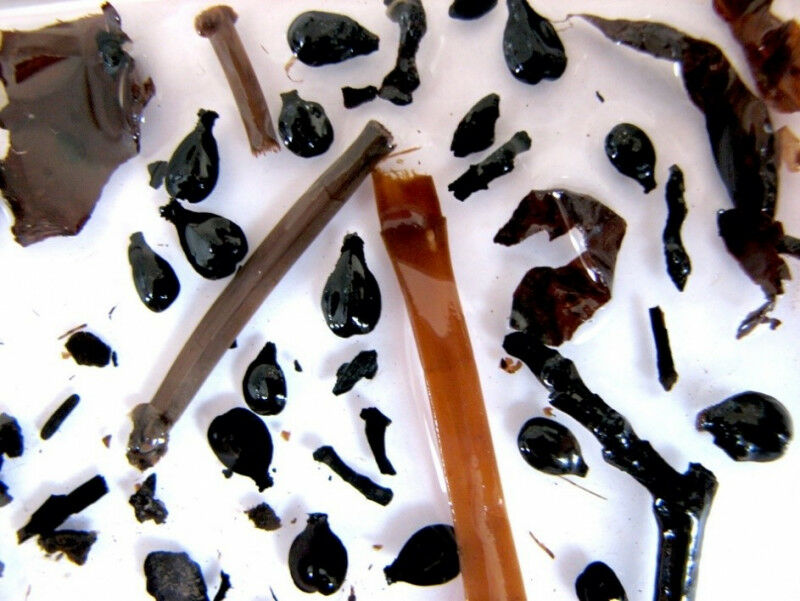
 Pressing residues from the Place de la Libération site, Troyes (Aube). The plant remains have been preserved in water because they came from the base of a well. Grape seeds, pedicels, skin and leaf fragments can be seen.
Pressing residues from the Place de la Libération site, Troyes (Aube). The plant remains have been preserved in water because they came from the base of a well. Grape seeds, pedicels, skin and leaf fragments can be seen. Véronique ZECH-MATTERNE/AASPE - Although the reputation of Champagne is well established, the history of Champagne wines and vineyards is poorly documented. However, a research team led by scientists from the CNRS and the Université de Montpellier at the Institut des sciences de l'évolution de Montpellier 1 has just lifted the veil on this history by analysing the archaeological grape seeds from excavations carried out in Troyes and Reims. Dated to between the 1st and 15th centuries AD, the seeds shed light on the evolution of Champagne wine growing, prior to the invention of the famous Champagne, for the first time. According to the researchers, "wild" 2 vines were cultivated throughout the period studied.
TO READ THIS ARTICLE, CREATE YOUR ACCOUNT
And extend your reading, free of charge and with no commitment.
Your Benefits
- Access to all content
- Receive newsmails for news and jobs
- Post ads