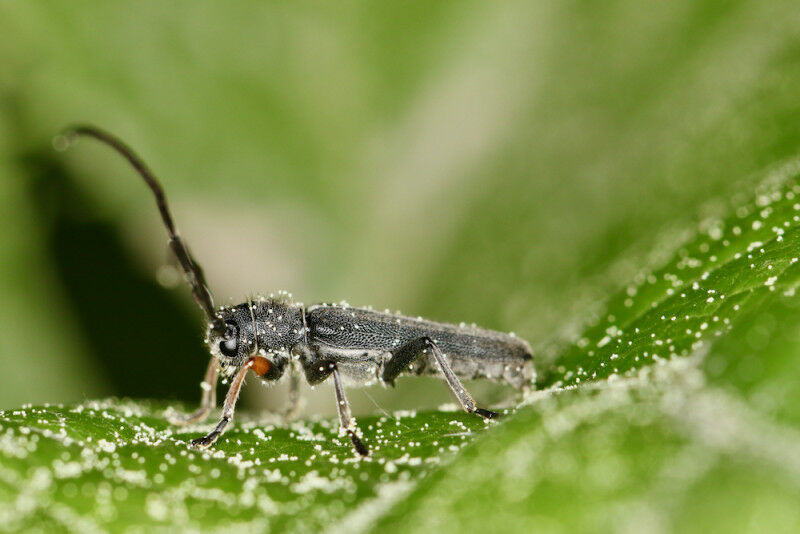
Phytoecia cylindrica is a longhorn beetle that likes to feed on plants such as wild carrot. The larvae of the beetle develop in the stems of the plants where they forage. Photo: Felix Neff / WSL
Phytoecia cylindrica is a longhorn beetle that likes to feed on plants such as wild carrot. The larvae of the beetle develop in the stems of the plants where they forage. Photo: Felix Neff / WSL Joint project including Göttingen University observes reduced plant species richness and declining diversity of associated insects Where plant species diversity decreases, insect diversity decreases too and with it biodiversity as a whole. From the intensively managed meadows and pastures to dense and dark beech forests, insects that specialise in just a few plant species are disappearing: the plants that provide their food no longer grow there. This is shown by an international study with the participation of the University of Göttingen. The results were published Advances. Intensive land use poses a major threat to biodiversity, including to herbivorous insects and their host plants.
TO READ THIS ARTICLE, CREATE YOUR ACCOUNT
And extend your reading, free of charge and with no commitment.