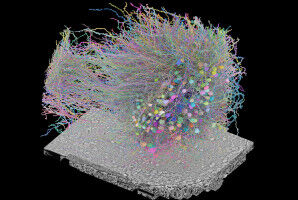
Coccolithophores, an important constituent of the plankton, evolved following the rhythm of Earth’s orbital eccentricity.
Coccolithophores, an important constituent of the plankton, evolved following the rhythm of Earth's orbital eccentricity. Luc BEAUFORT / CNRS / CEREGE - Coccolithophores are microscopic algae that form tiny limestone plates, called coccoliths, around their single cells. The shape and size of coccoliths varies according to the species. After their death, coccolithophores sink to the bottom of the ocean and their coccoliths accumulate in sediments, which faithfully record the detailed evolution of these organisms over geological time. A team of scientists led by CNRS researchers 1 show, in an article published in Nature on the 1
st December 2021, that certain variations in Earth's orbit have influenced the evolution of coccolithophores. To achieve this, no less that 9 million coccoliths, spanning an interval of 2.8 million years and several locations in the tropical ocean, were measured and classified using automated microscope techniques and artificial intelligence. The researchers observed that coccoliths underwent cycles of higher and lower diversity in size and shape, with rhythms of 100 and 400 thousand years.
TO READ THIS ARTICLE, CREATE YOUR ACCOUNT
And extend your reading, free of charge and with no commitment.
Your Benefits
- Access to all content
- Receive newsmails for news and jobs
- Post ads