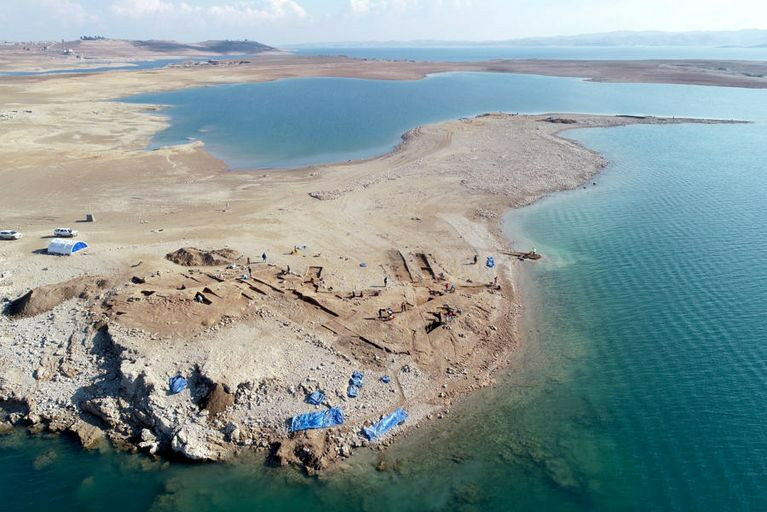
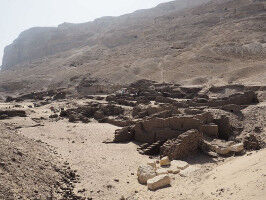
The archaeological site of Kemune in the dried-up area of the Mosul reservoir
The archaeological site of Kemune in the dried-up area of the Mosul reservoir - A team of German and Kurdish archaeologists have uncovered a 3400-year-old Mittani Empire-era city once located on the Tigris River. The settlement emerged from the waters of the Mosul reservoir early this year as water levels fell rapidly due to extreme drought in Iraq. The extensive city with a palace and several large buildings could be ancient Zakhiku - believed to have been an important center in the Mittani Empire (ca. BC). Iraq is one of the countries in the world most affected by climate change. The south of the country in particular has been suffering from extreme drought for months. To prevent crops from drying out, large amounts of water have been drawn down from the Mosul reservoir - Iraq's most important water storage - since December. This led to the reappearance of a Bronze Age city that had been submerged decades ago without any prior archaeological investigations.
TO READ THIS ARTICLE, CREATE YOUR ACCOUNT
And extend your reading, free of charge and with no commitment.