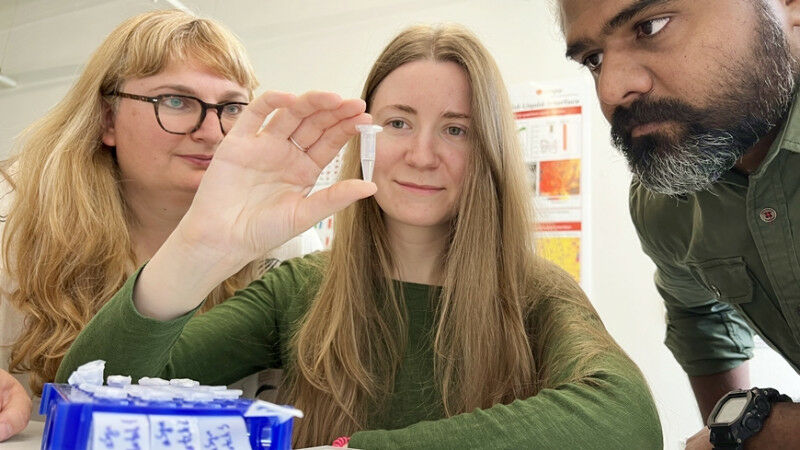
Protein detectives: researchers Peter Nirmalraj and Olena Synhaivska from the Transport at Nanoscale Interfaces lab and Silvia Campioni from the Cellulose & Wood Materials lab (from right to left) decipher important steps in the molecular disease process of Parkinson’s. Image: Empa
Protein detectives: researchers Peter Nirmalraj and Olena Synhaivska from the Transport at Nanoscale Interfaces lab and Silvia Campioni from the Cellulose & Wood Materials lab ( from right to left ) decipher important steps in the molecular disease process of Parkinson's. Image: Empa - Copper exposure in the environment and the protein alpha-synuclein in the human brain could play an important role in the pathogenesis of Parkinson's disease. A team from Empa and the University of Limerick was able to show how the protein takes on an unusual shape when exposed to large amounts of copper ions. The findings could help develop new strategies for the treatment of neurodegenerative diseases. The causes of Parkinson's disease are not yet fully understood. Long before the onset of the typical muscle tremor, the appearance of defective proteins in the brain could be a first sign. Researchers at Empa and the University of Limerick in Ireland have now taken a closer look at the abnormal shape of these alpha-synucleins in the form of protein rings.
TO READ THIS ARTICLE, CREATE YOUR ACCOUNT
And extend your reading, free of charge and with no commitment.