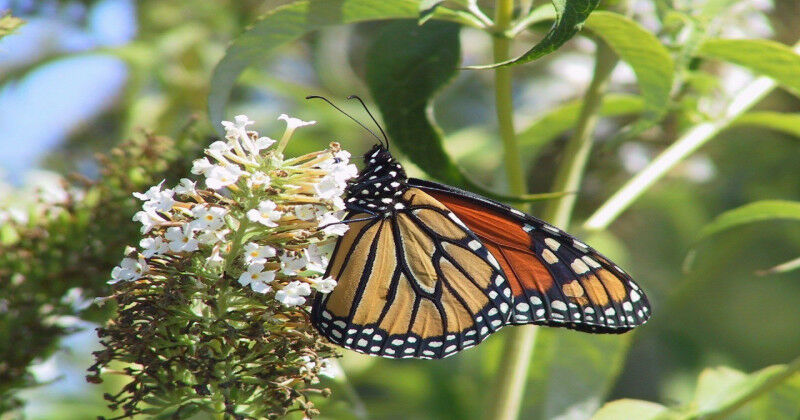
A Monarch Butterfly is seen on a flower. (Provided by Jeremy McNeil)
A Monarch Butterfly is seen on a flower. (Provided by Jeremy McNeil) - Climate change has wreaked havoc with many species' life cycles and now a pair of Western students is shedding light on how it's affecting the survival of two high-profile insects. Working under the supervision of biology professor Jeremy McNeil, master's student Campbell McKay is looking into how feeding on different milkweed species could affect the probability that Monarch butterflies born in the fall migrate to their overwintering grounds in Mexico. In the last few years, lingering summer temperatures have led some fall butterflies to mate rather than migrate, and their offspring - if they survive - emerge too late for their own good. Meanwhile, fellow master's student Cailyn McKay (no relation) is showing how higher temperatures might doom the true armyworm, a crop pest that farmers would dearly love to be rid of. First up, the armyworms. These insects spend winter in the southern U.S. and migrate to Canada and the northern U.S. in the summer.
TO READ THIS ARTICLE, CREATE YOUR ACCOUNT
And extend your reading, free of charge and with no commitment.