Credit: K. Schoonjans, J. Auwerx (EPFL)
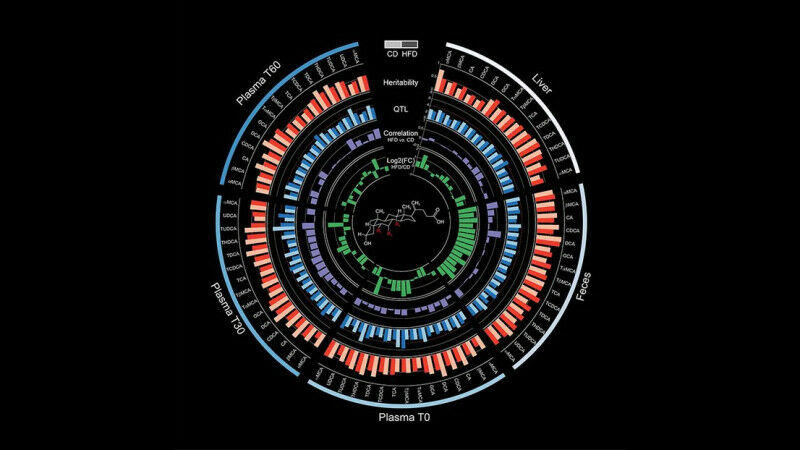
Credit: K. Schoonjans, J. Auwerx (EPFL) - Scientists have used a systems genetics approach to unravel novel genetic and environmental modulators of bile acid homeostasis. Their findings provide new insights into the regulatory mechanisms of bile acid homeostasis and may have implications for the treatment of metabolic diseases. Image: Circos plot summarizing the bile acid species quantified in different biological compartments, their changes, correlation and associations with quantitative trait loci in two different diets. Credit: Schoonjans and Auwerx laboratories. Bile acids are a large group of cholesterol derivatives that are well known for their role in facilitating the intestinal absorption of fats. Once re-absorbed from the intestine, bile acids circulate in the blood, where they can function as powerful hormones. The concentration and composition of bile acids in the blood change after each meal and this allows them to inform other organs that energy is available.
TO READ THIS ARTICLE, CREATE YOUR ACCOUNT
And extend your reading, free of charge and with no commitment.