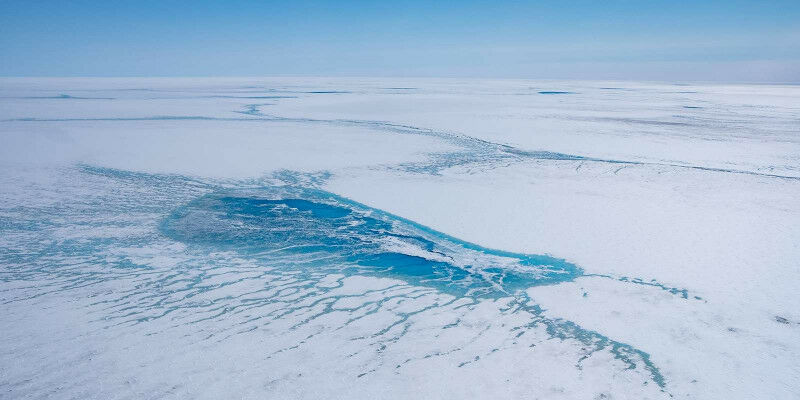
Formation of new rivers on the surface of the Greenlandic ice cap (Photo: UNIFR
Formation of new rivers on the surface of the Greenlandic ice cap (Photo: UNIFR Using more than 25'000 satellite images, Andrew Tedstone and Horst Machguth, two researchers from the University of Freiburg, have observed that the runoff of water from the melting of the Greenland ice sheet has increased significantly in recent years. This phenomenon, caused by global warming, contributes to a 1 mm rise in sea level each year . The Greenland ice sheet is a huge mass of ice located in the Arctic. If it were to melt completely, it would raise the sea level by 7 meters. As the Arctic has warmed in recent decades, scientists have already seen an increase in the amount of meltwater flowing from the ice sheet into the ocean. This phenomenon contributes to a 1 mm rise in sea level each year. A large part of the ice sheet is covered by a nevé, i.e. old snow that gradually compacts and turns into ice. The upper few meters of this snow pack work like a bath sponge. When its surface melts, the water flows into the pores below. There, the water refreezes in place, forming thin layers of ice inside the sponge, but does not flow out to sea. However, with the recent increase in melting episodes, the amount of water percolating inside the nevé has increased, causing these ice layers to expand significantly. Now several meters thick, these layers make it more difficult for water to infiltrate through the pores of the snow and thus prevent it from refreezing in place. Hence the question: where does the melt water flow to?
TO READ THIS ARTICLE, CREATE YOUR ACCOUNT
And extend your reading, free of charge and with no commitment.