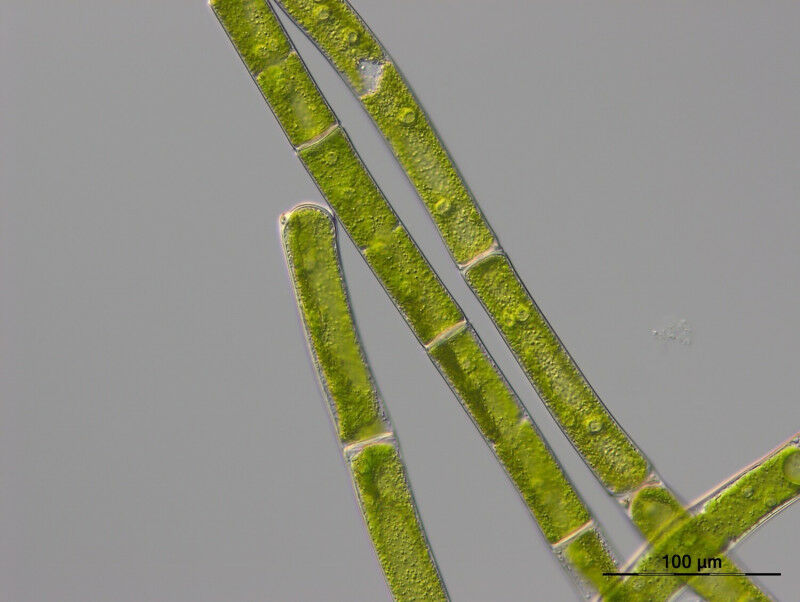
The Zygnematophyceae comprise around 4,000 species and display a fascinating morphological diversity - from the beautiful desmids to filamentous species responsible for pond scum. Photo: Dr Tatiana Darienko
The Zygnematophyceae comprise around 4,000 species and display a fascinating morphological diversity - from the beautiful desmids to filamentous species responsible for pond scum. Photo: Dr Tatiana Darienko Researchers including Göttingen University use genomic data to pinpoint emergences of multicellularity Land plants are an extremely diverse group and, in terms of structure, the most complex organisms that photosynthesize. Their closest algal relatives, the Zygnematophyceae , however, have a more humble body plan: they are simply unicells or just filaments. Yet, appearances are deceptive. There is an astounding diversity to Zygnematophyceae and their morphologies have experienced a turbulent evolutionary history. An international team of scientists led jointly by the Universities of Göttingen and Cologne has taken a deep dive into the evolutionary history of Zygnematophyceae . Their results revise the relationships of this group using modern gene sequencing data and pinpoint the emergences of multicellularity.
TO READ THIS ARTICLE, CREATE YOUR ACCOUNT
And extend your reading, free of charge and with no commitment.