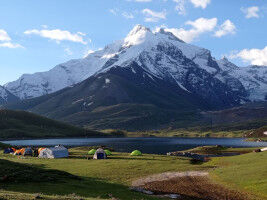
Die Weideflächen in Tibet werden hauptsächlich für Yaks genutzt. Photo: Lena Becker, Universität Hannover
Die Weideflächen in Tibet werden hauptsächlich für Yaks genutzt. Photo: Lena Becker, Universität Hannover Research team including Göttingen University identifies limit based on microbiology functions The Tibetan plateau is of particular importance for a number of reasons: as a grazing ecosystem, as a carbon store, to initiate the monsoon climate, and to ensure a supply of drinking water. With low to moderate grazing, dead and living roots of the wild sedge plants that are widespread there protect the soil from degradation, meaning the gradual loss of ecosystem functions due to erosion. An international research team led by the Universities of Kiel, Göttingen and Hannover has now identified for the first time on a microbiological basis the critical threshold of grazing. Going past this point results in irreversible degradation. The results were published . Herds of roaming cattle used these pastures which are not overgrazed.
TO READ THIS ARTICLE, CREATE YOUR ACCOUNT
And extend your reading, free of charge and with no commitment.