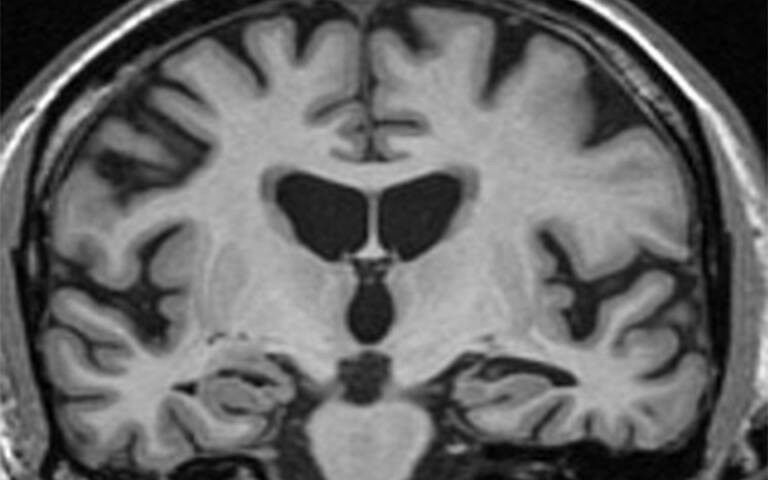
Brain scan - MRI scan showing normal brain. Photo courtesy Dr Sarah-Naomi James, a co-author of the research paper.
Brain scan - MRI scan showing normal brain. Photo courtesy Dr Sarah-Naomi James, a co-author of the research paper. By estimating people's brain age from MRI scans using machine learning, a team led by UCL researchers has identified multiple risk factors for a prematurely ageing brain. They found that worse cardiovascular health at age 36 predicted a higher brain age later in life, while men also tended to have older brains than women of the same age, as they report in The Lancet Healthy Longevity . A higher brain age was associated with slightly worse scores on cognitive tests, and also predicted increased brain shrinkage (atrophy) over the following two years, suggesting it could be an important clinical marker for people at risk of cognitive decline or other brain-related ill health. Lead author Professor Jonathan Schott (UCL Dementia Research Centre, UCL Queen Square Institute of Neurology and UK Dementia Research Institute at UCL) said: "We found that despite people in this study all being of very similar real ages, there was a very wide variation in how old the computer model predicted their brains to be. We hope this technique could one day be a useful tool for identifying people at risk of accelerated ageing, so that they may be offered early, targeted prevention strategies to improve their brain health." The researchers applied an established MRI based machine learning model to estimate the brain age of members of the Alzheimer's Research UK-funded Insight 46 study, led by Professor Schott.
TO READ THIS ARTICLE, CREATE YOUR ACCOUNT
And extend your reading, free of charge and with no commitment.