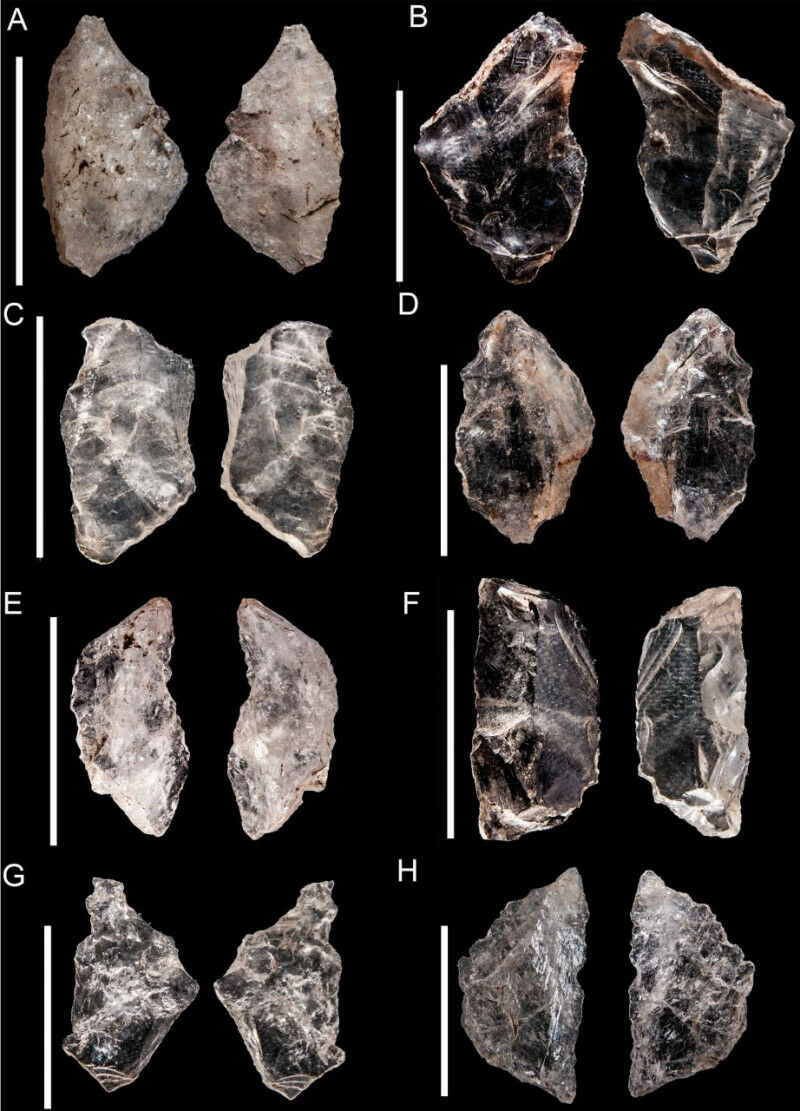
Quartz tools from the Sibudu Cave site in South Africa. Photo: Dr Paloma de la Peña
Quartz tools from the Sibudu Cave site in South Africa. Photo: Dr Paloma de la Peña - Archaeologists have found that a tool, dubbed the "stone Swiss Army knife" of prehistory, was made to look the same in enormous numbers across great distances and multiple biomes in southern Africa. This indicates early humans were sharing information and communicating with one another. In a world first, a team of international scientists, led by University of Sydney archaeologist, Dr Amy Way and Australian Museum, has revealed that early humans across southern Africa made a particular type of stone tool - a blade used for many purposes including hunting technology (such as barbs in hand thrown spears and possibly bow and arrows), for cutting wood, plants, bone, skin, feathers and flesh - in the same shape. The researchers reported this means populations must have been in contact with each other. Known as the "stone Swiss Army knife" of prehistory, the Howiesons Poort blades were made to a similar template across great distances and multiple biomes. The study published in Scientific Reports, found the artefacts produced in enormous numbers across southern Africa roughly 65 thousand years ago were made to a similar shape.
TO READ THIS ARTICLE, CREATE YOUR ACCOUNT
And extend your reading, free of charge and with no commitment.