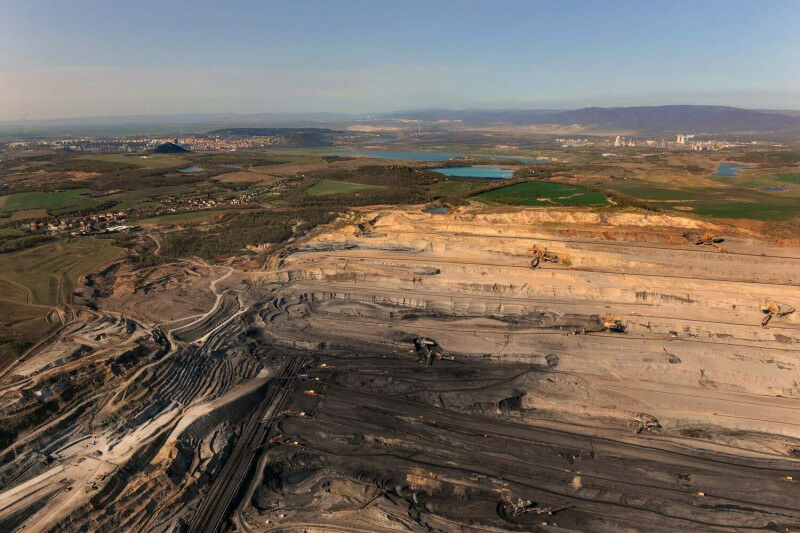
Mount Isa in Australia. This mining town came into existence due to the vast mineral deposits of lead, silver, copper and zinc. Photo: Marketa Hendrychova
Mount Isa in Australia. This mining town came into existence due to the vast mineral deposits of lead, silver, copper and zinc. Photo: Marketa Hendrychova Researchers including Göttingen University analyse resources, demographics and disruption in energy transition Research led by University of Queensland (UQ) and including the University of Göttingen analysed the effects of decarbonisation strategies by linking global resource inventories with demographic systems to generate a matrix showing the risks and benefits. The research suggests that increased demand for energy transition metals (ETMs) could be more disruptive to some communities than winding back production of thermal coal. The team calculated that while a complete phase-out of coal could disrupt mine-town systems with a minimum of 33.5 million people, an additional 115.7 million would be at risk from disruption by ETMs. The results were published in Nature Communications. The researchers linked the location and type of resource with human settlements in order to assess interactions, dependencies and contingencies between resources and populations - a -mine-town systems- approach.
TO READ THIS ARTICLE, CREATE YOUR ACCOUNT
And extend your reading, free of charge and with no commitment.