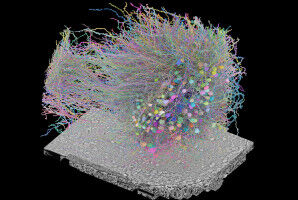
Scientists identify neurons that restore walking after paralysis
A new study by scientists at the.NeuroRestore research center has identified the type of neuron that is activated and remodeled by spinal cord stimulation, allowing patients to stand up, walk and rebuild their muscles - thus improving their quality of life. This discovery, made in nine patients, marks a fundamental, clinical breakthrough. The study was published today in Nature. In a multi-year research program coordinated by the two directors of.NeuroRestore - Grégoire Courtine, a neuroscience professor at EPFL, and Jocelyne Bloch, a neurosurgeon at Lausanne University Hospital (CHUV) - patients who had been paralyzed by a spinal cord injury and who underwent targeted epidural electrical stimulation of the area that controls leg movement were able to regain some motor function. In a new study by.NeuroRestore scientists, appearing today in Nature, not only was the efficacy of this therapy demonstrated in nine patients, but the improved motor function was shown to last in patients after the neurorehabilitation process was completed and when the electrical stimulation was turned off. This suggested that the nerve fibers used for walking had reorganized. The scientists believe it was crucial to understand exactly how this neuronal reorganization occurs in order to develop more effective treatments and improve the lives of as many patients as possible.