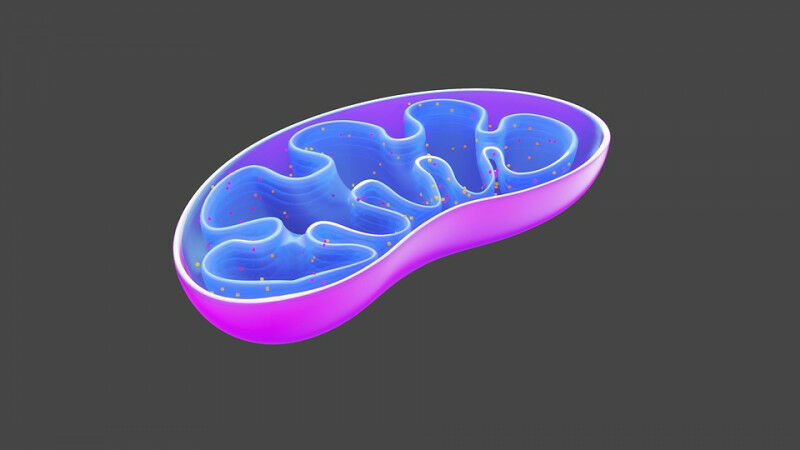
Sectional view of a mitochondria. (Image: SkieTheAce / pixabay)
Sectional view of a mitochondria. (Image: SkieTheAce / pixabay) - Mildly stressing mitochondria with an antibiotic can increase tolerance against respiratory infections, shows a study by scientists at EPFL. Many respiratory infections, such as influenza or COVID-19 add significant stress to cells and organs, which can lead to acute respiratory distress syndrome (ARDS), which itself can eventually cause death in aged or sensitive individuals. "Novel therapeutic strategies to address ARDS, instead of fighting the infectious agent, could try to elicit the tolerance of the host organism towards the inflammatory challenge by boosting its natural adaptive stress responses," says Professor Johan Auwerx at EPFL's School of Life Sciences. In a new study, Adrienne Mottis at EPFL and her colleagues have shown that one such strategy can exploit a biological phenomenon known as "mitohormesis". Mitohormesis describes the fact that a mild stress to a cell's mitochondria can induce a series of responses that actually increase the cell's health and viability. Mitochondria are the cell's main energy-harvesting organelles, and are therefore constantly monitored by the cell's "surveillance" systems.
TO READ THIS ARTICLE, CREATE YOUR ACCOUNT
And extend your reading, free of charge and with no commitment.