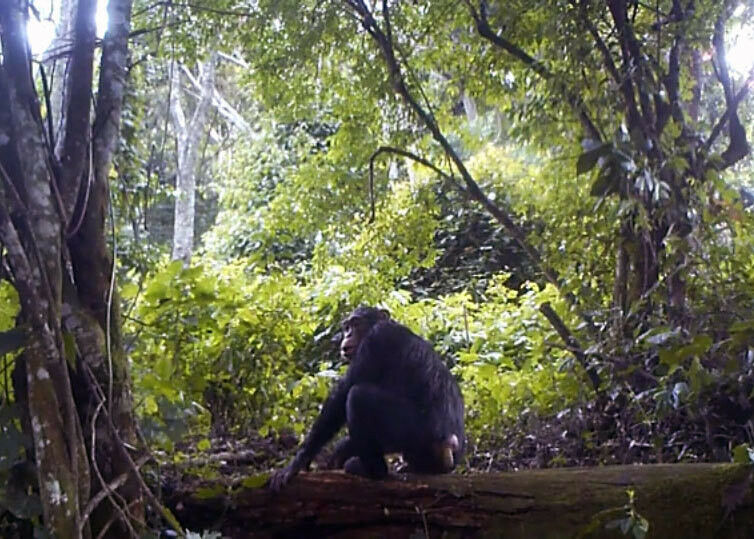
The researchers used faecal samples as a non-invasive method to obtain genetic material without disturbing the chimpanzees. Photo: MPI-EVA PanAf
The researchers used faecal samples as a non-invasive method to obtain genetic material without disturbing the chimpanzees. Photo: MPI-EVA PanAf New genomic tools shed light on the evolutionary history of chimpanzees and contribute to their conservation An international research team led by the Institute of Evolutionary Biology (IBE), the German Centre for Integrative Biodiversity Research (iDiv), the Max Planck Institute for Evolutionary Anthropology (MPI EVA) and Leipzig University has compiled the largest genomic catalogue of wild chimpanzee populations in Africa. For the first time, genomic information, obtained from hundreds of faecal samples of chimpanzees from across their range, has been sequenced, clarifying their evolutionary history and contributing to the conservation of these great apes. The new genomic atlas, published in the journal Cell Genomics, has the potential to map routes and sources of illegal trafficking that could be used to protect this endangered species. Chimpanzees inhabit the tropical African savannah woodlands and forests. In contrast to the hominid sites preserved to this day - mainly in caves and temperate climates - the areas that chimpanzees have inhabited have resulted in few specimens preserved or detected in the archaeological record. Given the almost complete absence of chimpanzee fossils, the genetic information from current populations is crucial for describing their evolutionary history and their genetic diversity and contributing to their conservation.
TO READ THIS ARTICLE, CREATE YOUR ACCOUNT
And extend your reading, free of charge and with no commitment.