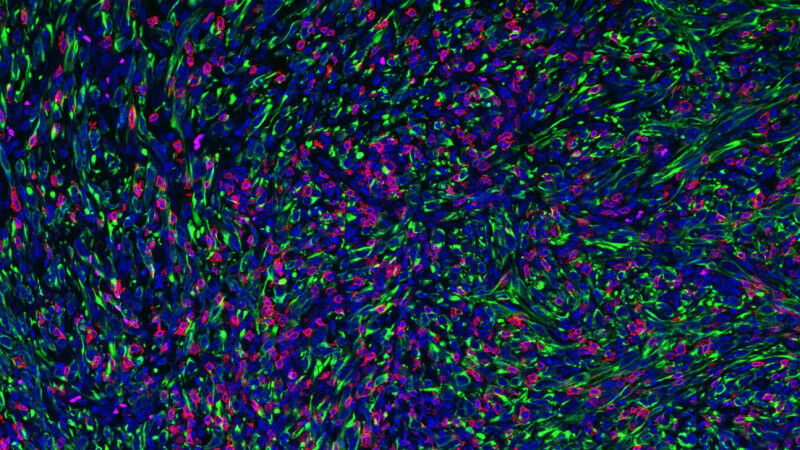
Tumor with FMRP-deficient cancer cells (in green) being infiltrated and attached by killer (CD8) T cells. Credit: Jeremy Guillot (Hanahan Lab - EPFL).
Tumor with FMRP-deficient cancer cells ( in green ) being infiltrated and attached by killer (CD8) T cells. Credit: Jeremy Guillot (Hanahan Lab - EPFL). Scientists at EPFL, Ludwig Institute of Cancer Research, and CHUV have identified a key protein that helps tumors evade attacks by the immune system, contributing to poor responses to immunotherapy in the clinic. Immunotherapy is a cutting-edge approach to treating cancer by turning the patient's own immune system against their tumor. Our increasing knowledge of the mechanisms by which the body regulates immune responses has been transformative to our fight against cancer. But despite success rates, immunotherapy has time and again met with a stubborn obstacle: tumor cells often evade the "radar" of immune cells seeking to destroy them. This in turn leads to treatment resistance, which in many cases would benefit from a deeper understanding of mechanisms that can help circumvent it.
TO READ THIS ARTICLE, CREATE YOUR ACCOUNT
And extend your reading, free of charge and with no commitment.