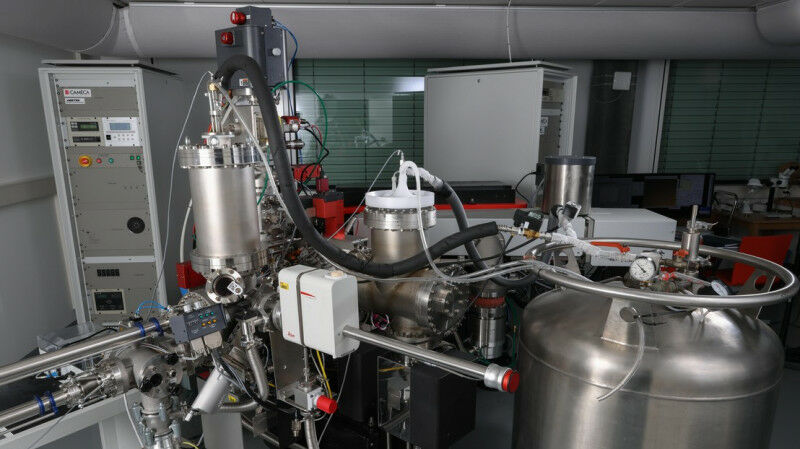
The CryoNanoSIMS setup at EPFL. Credit: A. Meibom (EPFL)
The CryoNanoSIMS setup at EPFL. Credit: A. Meibom (EPFL) Scientists at EPFL use cutting-edge imaging techniques to shed light on the progression of Parkinson's disease by studying how the main culprit, the protein alpha-synuclein, disrupts cellular metabolism. Parkinson's disease is a complex neurodegenerative disorder that leads to the deterioration of specific types of neurons in the brain, resulting in a number of motor and non-motor symptoms. It is currently estimated that more than 10 million people in the world are living with Parkinson's disease, the second most common neurodegenerative disorder after Alzheimer's. That number is expected to swell up to 14 million by 2040 in what is being referred to as the Parkinson's pandemic. One of the key events in Parkinson's disease is the accumulation of a protein called alpha-synuclein inside neurons. That accumulation disrupts the normal functioning of the cells, giving rise to the symptoms of Parkinson's and other disorders, and progresses into aggregates called Lewy bodies.
TO READ THIS ARTICLE, CREATE YOUR ACCOUNT
And extend your reading, free of charge and with no commitment.