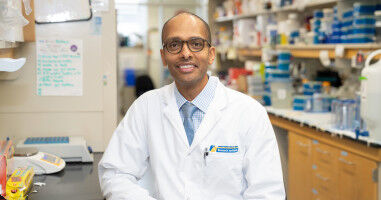
Using fMRI imaging and machine learning, graduate students Matthew Kolisnyk (left), Karnig Kazazian and their collaborators discovered they could predict which patients would recover from a serious brain injury with an accuracy of 80 per cent. (Jeff Renaud/Western Communications)
Using fMRI imaging and machine learning, graduate students Matthew Kolisnyk ( left ), Karnig Kazazian and their collaborators discovered they could predict which patients would recover from a serious brain injury with an accuracy of 80 per cent. (Jeff Renaud/Western Communications) - Two graduate students from Western University have developed a ground-breaking method for predicting which intensive care unit (ICU) patients will survive a severe brain injury. Matthew Kolisnyk and Karnig Kazazian combined functional magnetic resonance imaging (fMRI) with state-of-the art machine learning techniques to tackle one of the most complex issues in critical care. Whether it is the result of a stroke, cardiac arrest or traumatic brain injury, lives can forever be changed by a serious brain injury. When patients are admitted to the ICU, families are faced with tremendous uncertainty. Will my loved one recover? Are they aware of what is going on? Will they ever be the same again? Despite these essential questions, health-care professionals are equally uncertain about the potential of a good recovery. The graduate students are PhD candidates at Schulich School of Medicine & Dentistry in the lab of renowned neuroscientist Adrian Owen.
TO READ THIS ARTICLE, CREATE YOUR ACCOUNT
And extend your reading, free of charge and with no commitment.