(Image: Pixabay CC0)
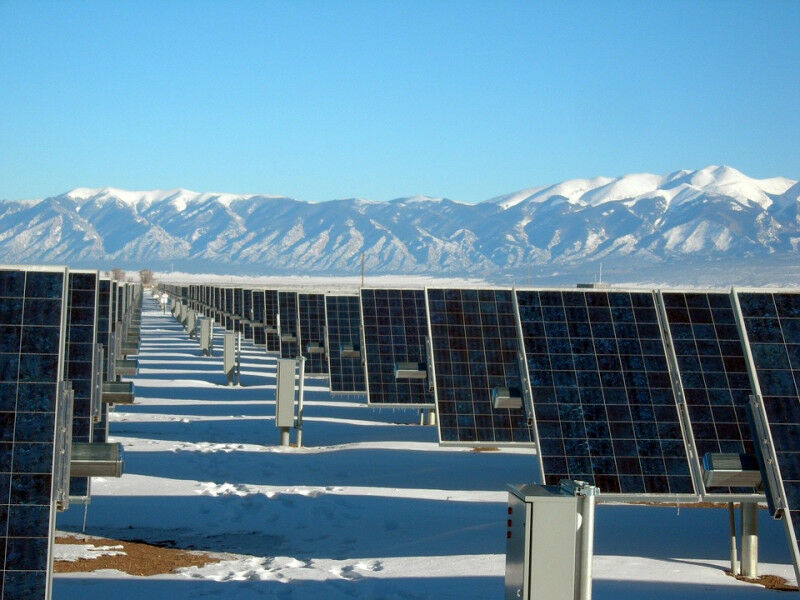
(Image: Pixabay CC0) - Professor Phillip Dale of the University of Luxembourg and Professor Mike Scarpulla of the University of Utah have discovered that researchers improve the efficiency of solar cells, the constituents of photovoltaic panels, at the same rate independently of the technology over the last decades. Two important consequences of the study are: (i) it is possible to measure the promise of new solar cell technologies at any stage of development and (ii) from the science of science perspective, the rate of scientific learning appears constant over the last decades, but hints of accelerated learning are discernible as ideas are cross-pollinated between the technologies. Solar cells are one of the key technologies which will enable energy independence and allow a green energy transition to net zero carbon. The amount of electricity that a solar cell can produce is related to its efficiency; the higher the efficiency the greater the amount of electrical energy that can be produced from the same surface area and constituent materials, and the cheaper the price of electricity becomes. Photovoltaic modules already provide one of the cheapest forms of renewable energy generation . Normally, the efficiency performance progress of solar cell development is measured as a function of time . However, what is important, is not the time that has passed, but the research effort required to achieve an efficiency improvement.
TO READ THIS ARTICLE, CREATE YOUR ACCOUNT
And extend your reading, free of charge and with no commitment.