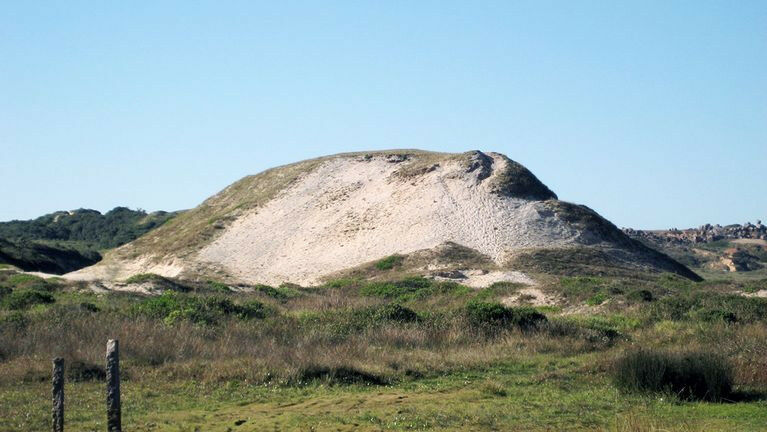
Along a stretch of more than 3,000 kilometers on the Atlantic coast of Brazil, there are numerous so-called sambaquis, mounds of shells and other calcareous material.
Along a stretch of more than 3,000 kilometers on the Atlantic coast of Brazil, there are numerous so-called sambaquis, mounds of shells and other calcareous material. Researchers from the Senckenberg Centre for Human Evolution and Palaeoenvironment at the University of Tübingen and the Brazilian University of São Paulo, together with an international research team led by first author Dr. Tiago Ferraz, compiled the largest genomic dataset from Brazil to demonstrate that sambaqui communities on the southern and southeastern coasts did not represent a genetically homogeneous population. The sambaquis, also known as -shell mounds,- were established about 8,000 to 1,000 years ago along a stretch of more than 3,000 kilometers on the eastern coast of South America. According to archaeological records, the sambaqui builders shared clear cultural similarities. However, contrary to what was expected, these groups of people showed significant genetic differences. In their study, published today in the journal -Nature Ecology and Evolution,- the scientists attribute this to different demographic trajectories, possibly due to regional contacts with inland groups. Mounds up to several hundred meters long and occasionally over thirty meters high can be found along a stretch of more than 3,000 kilometers on Brazil's Atlantic coast.
TO READ THIS ARTICLE, CREATE YOUR ACCOUNT
And extend your reading, free of charge and with no commitment.