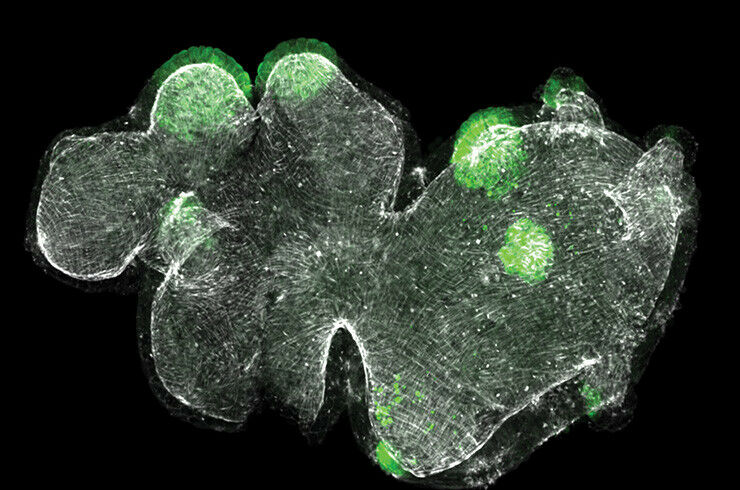
In animals with reduced levels of a protein called Zic4, tentacle cells change their identity to became foot cells (green). Image credits: Jaroslav Ferenc
In animals with reduced levels of a protein called Zic4, tentacle cells change their identity to became foot cells ( green ). Image credits: Jaroslav Ferenc - Our body is made of billions of cells that have the same overall genome but play specialized roles to create different tissues and organs. Working in a freshwater invertebrate, FMI researchers found that a protein called Zic4 drives the formation and maintenance of the tentacles that surround the animal's mouth. Dampening the levels of Zic4 makes tentacle cells change into different types of cells. The findings could help researchers to pinpoint the factors that govern the choice between two cell fates in other animals. As an embryo develops, its stem cells differentiate into the precursors of various cell lineages that give rise to neurons, blood cells, skin cells and other types of specialized cells. However, how cell types keep their specific identity remain mysterious.
TO READ THIS ARTICLE, CREATE YOUR ACCOUNT
And extend your reading, free of charge and with no commitment.