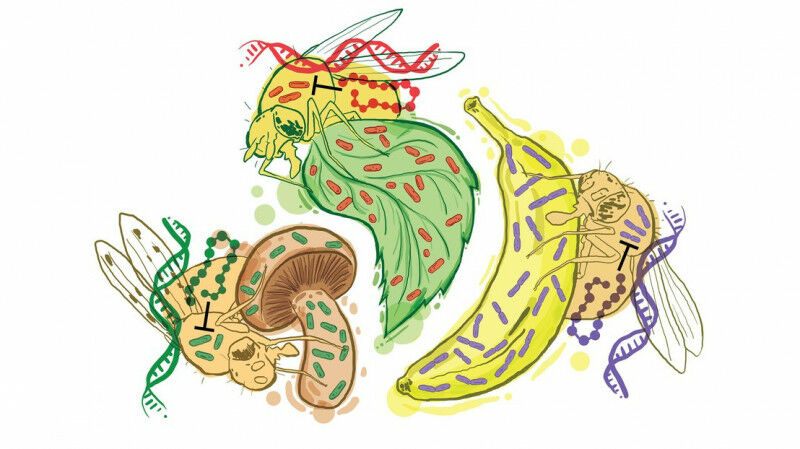
A sketch of Drosophila fruit flies. Credit: Hanson et al. ( adg5725)
A sketch of Drosophila fruit flies. Credit: Hanson et al. ( adg5725) A new study from researchers at EPFL reveals how bacteria shape the immune system of fruit flies, shedding light on the evolution of host defenses against specific pathogens and beneficial microbes. Animals and humans coexist with a vast array of microorganisms known as the microbiome, forming an intricate relationship that can range from mutually beneficial to pathogenic. To safeguard against harmful pathogens and maintain the presence of beneficial microorganisms, animals have evolved various defenses. One of those are the small antimicrobial peptides (AMPs); small peptides that combating invading microbes. AMPs are crucial immune effectors in both plants and animals, fighting against potential infections while also influencing the composition of the host's microbiome.
TO READ THIS ARTICLE, CREATE YOUR ACCOUNT
And extend your reading, free of charge and with no commitment.