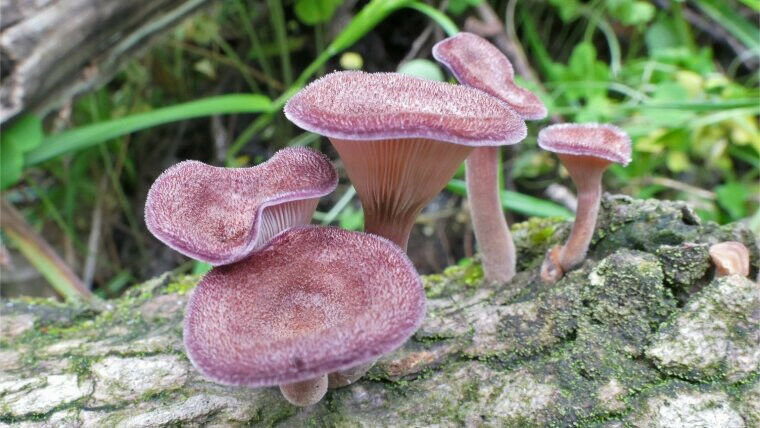
Panus rudis. Image: Rui Chen,Yan-Long Yang
Panus rudis. Image: Rui Chen,Yan-Long Yang - The investigation of the biosynthesis of panepoxydone, an important substance for biomedical research, in basidiomycetes has revealed a new enzyme as an important catalyst. The results of the researchers from the Leibniz-HKI, the Friedrich Schiller University Jena and the Cluster of Excellence Balance of the Microverse have now been published in the journal "Angewandte Chemie International Edition". The ruddy panus, scientifically "Panus rudis", is a fungus from the family of stem pore relatives. It is one of the first colonizers of dead deciduous wood, prefers sun-exposed locations and can survive longer dry periods without damage. However, something else makes it interesting for the pharmaceutical industry. It produces panepoxydone, which belongs to the epoxycyclohexenone (ECH) family of substances.
TO READ THIS ARTICLE, CREATE YOUR ACCOUNT
And extend your reading, free of charge and with no commitment.