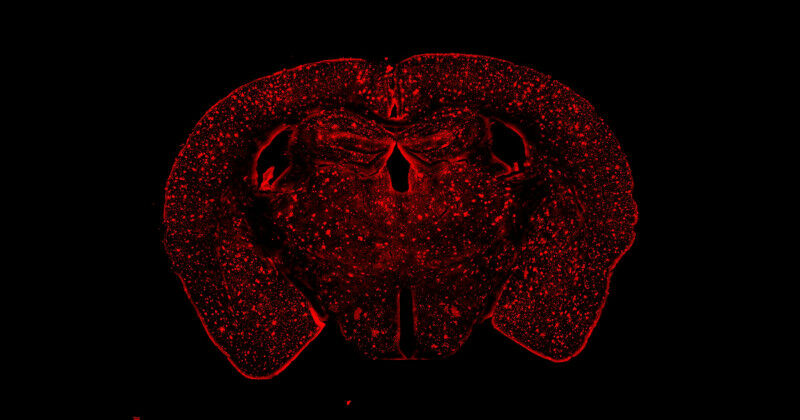
Brain plaques of mouse models in Alzheimer’s disease show beta-amyloid protein buildup in the form of bright spots across the brain. (Schulich School of Medicine & Dentistry image)
Brain plaques of mouse models in Alzheimer's disease show beta-amyloid protein buildup in the form of bright spots across the brain. (Schulich School of Medicine & Dentistry image) Western researchers reveal link between Alzheimer's disease and sex hormones Use of female animal models in the lab led to crucial finding Alzheimer's disease disproportionately affects women, who represent about two-thirds of those diagnosed with the late-onset type of the disease. Previous research has shown Alzheimer's is also more severe and progresses more rapidly in women, and women with Alzheimer's experience a steeper cognitive decline - loss of memory, attention, and the ability to communicate and make decisions - compared to men with the disease. The biological bases for these differences between men and women with Alzheimer's disease are not well understood. However, understanding them is necessary for developing appropriate therapies. In a new study in mice and humans, Western researchers have shown female sex hormones play a significant role in how Alzheimer's manifests in the brain. The study, published in Alzheimer's & Dementia: The Journal of the Alzheimer's Association , also highlights the importance of developing therapeutic strategies focused on these hormonal connections.
TO READ THIS ARTICLE, CREATE YOUR ACCOUNT
And extend your reading, free of charge and with no commitment.