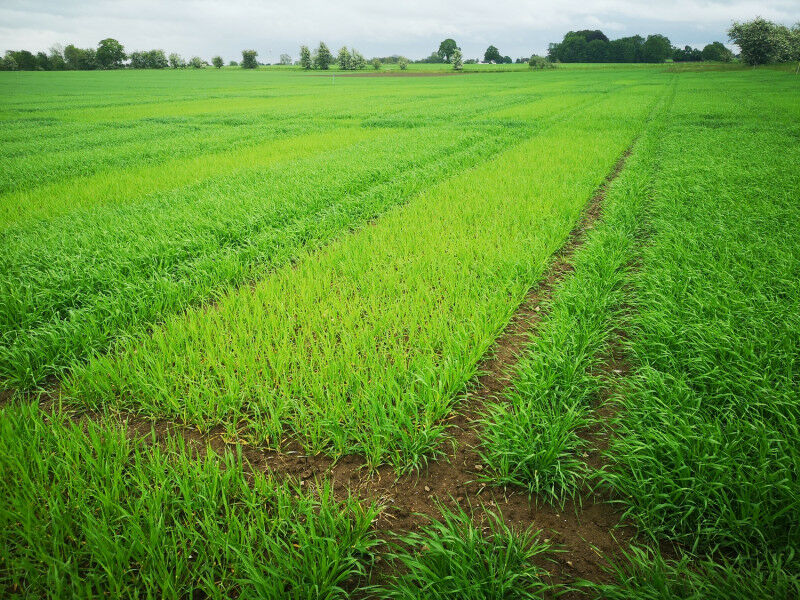
BARISTA project: Barley field trials in Ringsted/Denmark. Photo: M. Appiah/TROPAGS, Universität Göttingen
BARISTA project: Barley field trials in Ringsted/Denmark. Photo: M. Appiah/TROPAGS, Universität Göttingen International research team shows benefits of adapting barley varieties to climate change Extreme weather events such as heavy rains and flooding triggered by the intensification of the water cycle due to climate change, are increasingly threatening food security. Large collaborative research projects around the world are working to better adapt plant genetics to the climate conditions of current and future barley-growing regions. An international research team with participation from the University of Göttingen has now developed a novel modelling approach that can be used to make a global assessment of the possible effects of waterlogging and the adaptations of crop cultivation that will have to be made. The study was published in the journal Nature Communications. Until this new modelling and impact assessment approach was developed, it wasn-t possible to have a global overview of the impact of waterlogging. Lack of suitable experimental data had prevented the development of adequate and reliable models.
TO READ THIS ARTICLE, CREATE YOUR ACCOUNT
And extend your reading, free of charge and with no commitment.