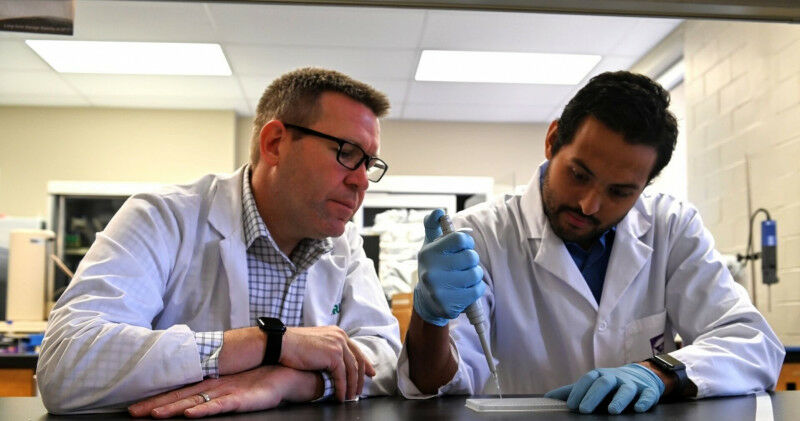
Study led by PhD candidate Sebastian R. Vanin (right), under the supervision of Daniel B. Hardy, has shown that even moderate exposure to CBD during pregnancy is linked to post-birth glucose intolerance specifically in males. (Prabhjot Sohal/Schulich School of Medicine & Dentistry)
Study led by PhD candidate Sebastian R. Vanin ( right ), under the supervision of Daniel B. Hardy, has shown that even moderate exposure to CBD during pregnancy is linked to post-birth glucose intolerance specifically in males. (Prabhjot Sohal/Schulich School of Medicine & Dentistry) Western research shows prenatal exposure to cannabis may increase diabetes risk in offspring Study finds exposure to CBD impacts glucose intolerance in male rats Cannabis consumption is prevalent among pregnant women in North America, particularly those between the ages of 18 and 24 years, previous research has shown. They report using it for various reasons, including alleviating nausea, body aches and anxiety related to pregnancy. While existing clinical data points to negative effects like fetal growth restriction and abnormal blood sugar levels in children born to mothers who used cannabis, the impact of the non-psychoactive compound of cannabis, cannabidiol (commonly known as CBD), on metabolic outcomes of the offspring remains less understood. A new study in animal models, led by PhD candidate Sebastian R. Vanin, under the supervision of Western professor Daniel B. Hardy , has shown that even moderate exposure to CBD during pregnancy is linked to post-birth glucose intolerance specifically in male offspring. "This is a critical finding, given that CBD, unlike cannabis' psychoactive compound, tetrahydrocannabinol or THC, is widely marketed and perceived to be a safer option by so many," said Hardy, associate professor in the departments of obstetrics & gynaecology and physiology & pharmacology at the Schulich School of Medicine & Dentistry.
TO READ THIS ARTICLE, CREATE YOUR ACCOUNT
And extend your reading, free of charge and with no commitment.