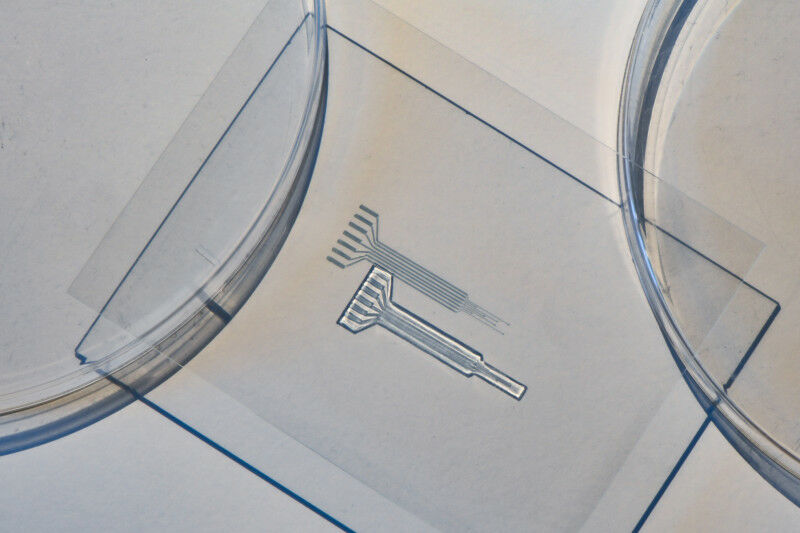
MIT engineers developed a metal-free, Jell-O-like material that is as soft and tough as biological tissue and can conduct electricity similarly to conventional metals. The new material, which is a type of high-performance conducting polymer hydrogel, may one day replace metals in the electrodes of medical devices. Credits : Image: Felice Frankel
MIT engineers developed a metal-free, Jell-O-like material that is as soft and tough as biological tissue and can conduct electricity similarly to conventional metals. The new material, which is a type of high-performance conducting polymer hydrogel, may one day replace metals in the electrodes of medical devices. Credits : Image: Felice Frankel A new Jell-O-like material could replace metals as electrical interfaces for pacemakers, cochlear implants, and other electronic implants. Do an image search for "electronic implants," and you'll draw up a wide assortment of devices, from traditional pacemakers and cochlear implants to more futuristic brain and retinal microchips aimed at augmenting vision, treating depression, and restoring mobility. Some implants are hard and bulky, while others are flexible and thin. But no matter their form and function, nearly all implants incorporate electrodes - small conductive elements that attach directly to target tissues to electrically stimulate muscles and nerves. Implantable electrodes are predominantly made from rigid metals that are electrically conductive by nature.
TO READ THIS ARTICLE, CREATE YOUR ACCOUNT
And extend your reading, free of charge and with no commitment.