Investigation of the mechanics of spores during a dormant period
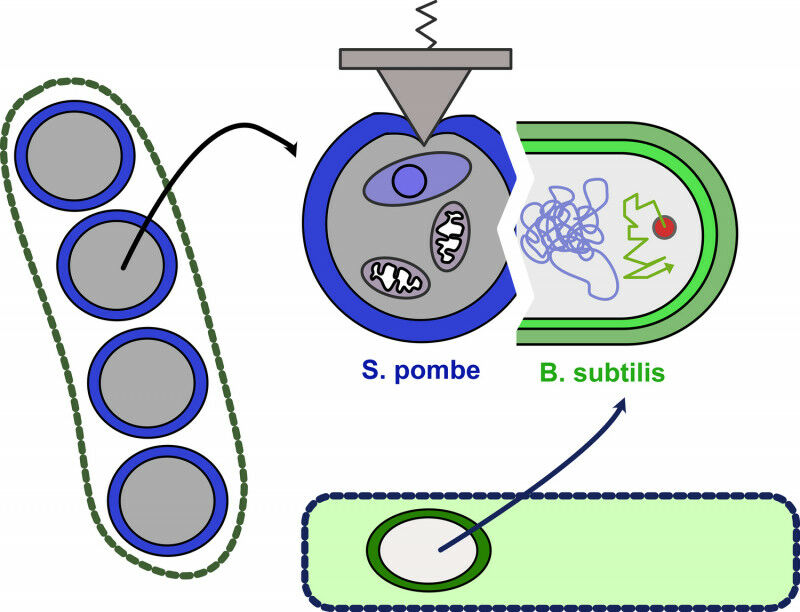
Investigation of the mechanics of spores during a dormant period Researchers at Göttingen University involved in research projects funded by Human Frontier Science Program University of Göttingen scientists are involved in two international research projects funded by the Human Frontier Science Program (HFSP) and coordinated at other universities. Biophysicist Professor Andreas Janshoff from the Faculty of Chemistry, together with researchers from the University of Warwick (who lead the project), the Hebrew University of Jerusalem, and Columbia University will investigate the dormant state and awakening of spores of bacterial and fungal origin. Neurobiologist Professor Martin Göpfert at the Faculty of Biology and Psychology will conduct research on the evolution of the multifunctionality of proteins, together with colleagues from the University of Leicester (who lead the project), the University of Toronto and Cornell University, New York. Project "When the going gets tough: Trans-kingdom spore dormancy and revival mechanisms across scales" In response to adverse conditions such as lack of water or nutrients, organisms from a range of different branches of the tree of life, retreat into a dormant state in the form of spores. Spores of bacteria, fungi and plants are the most resilient types known, which makes them true survivors. They can actively grow again after a dormant phase of several years and this can have a dramatic impact on the environment. Yet it is still not understood how alive the dormant spores are and how they manage to come back to life so quickly.
TO READ THIS ARTICLE, CREATE YOUR ACCOUNT
And extend your reading, free of charge and with no commitment.