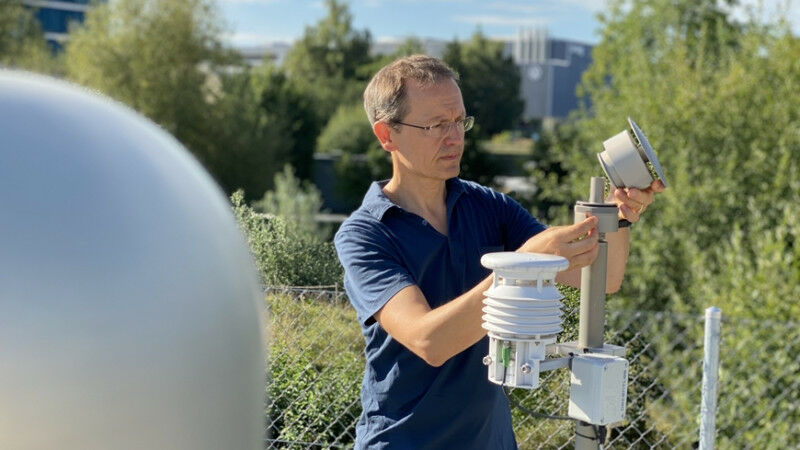
Christoph Hüglin from the Air Pollutants / Environmental Technology lab has investigated the suitability of criteria for the assessment of health risks with samples collected Switzerland in greater detail. Image: Empa
Christoph Hüglin from the Air Pollutants / Environmental Technology lab has investigated the suitability of criteria for the assessment of health risks with samples collected Switzerland in greater detail. Image: Empa - Large amounts of particulate matter in the air are known to be harmful to human health. But many questions remain unanswered: Which components are particularly dangerous? At what concentrations? The "oxidative potential" of particulate matter could serve as a criterion for assessing risks in the future - and researchers have explored it for Switzerland. Inflammation, bronchitis, asthma attacks, cardiovascular problems.. an excerpt from the list of possible health problems caused by high concentrations of particulate matter: particles with a diameter of ten micrometers or less - called PM10 - and even smaller PM2.5 particles that can enter our lungs from car exhaust, heating systems, industrial operations and natural sources. Although strict monitoring and abatement measures have reduced pollution levels in Switzerland since the 1990s, the problem persists in many places, especially in cities. Particle size, composition, sources and effects of particulate matter are not easy to determine.
TO READ THIS ARTICLE, CREATE YOUR ACCOUNT
And extend your reading, free of charge and with no commitment.