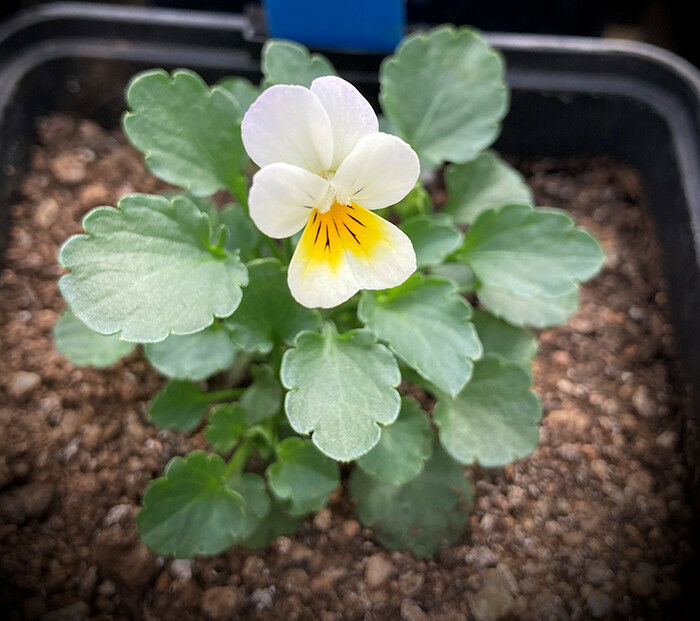
 Field pansies from a ’resurrected’ lineage monitored during this study.
Field pansies from a 'resurrected' lineage monitored during this study. Samson Acoca-Pidolle Scientists at the CNRS and the University of Montpellier
1 have discovered that flowering plants growing in farmland are increasingly doing without insect pollinators. As reproduction becomes more difficult for them in an environment depleted in pollinating insects, the plants are evolving towards self-fertilisation. These findings are published in a paper in the journal New Phytologist dated December 20, 2023. By comparing field pansies growing in the Paris region today with pansies from the same localities resurrected in the laboratory from seeds collected
2 between 1992 and 2001, the research team found that today's flowers are 10% smaller, produce 20% less nectar, and are less visited by pollinators than their ancestors. This rapid evolution is thought to be due to the decline in pollinator populations in Europe. Indeed, a study conducted in Germany showed that over 75% of the biomass of flying insects has vanished from protected areas in the last thirty years.
TO READ THIS ARTICLE, CREATE YOUR ACCOUNT
And extend your reading, free of charge and with no commitment.
Your Benefits
- Access to all content
- Receive newsmails for news and jobs
- Post ads