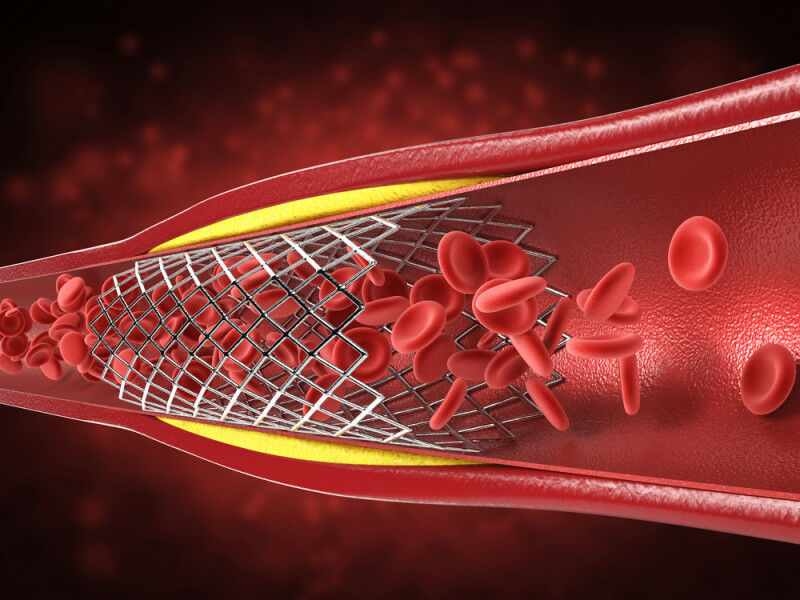
(© Image: Depositphotos) - Coronary stents are implanted in more than 26,000 patients in Austria every year to treat angina pectoris or heart attacks. These are vascular stents made of metal that help to keep narrowed vessels open for many years. Acute clot formation (thrombosis) is the most feared complication of these procedures. A study recently published by MedUni Vienna in the Journal of the American Heart Association (JAHA) has now shown for the first time that acute inflammation increases the risk of stent thrombosis threefold. As part of the study, the team led by first author Konstantin Krychtiuk and principal investigator Walter Speidl (Division of Cardiology at MedUni Vienna's Department of Medicine II) analysed data from 11,327 patients who had received a stent over the past decade. This measure was indicated due to atherosclerotic deposits in the coronary arteries, which had led to narrowing and thus to angina pectoris or heart attacks. In addition to bypass surgery, the most common treatment method in such cases is the implantation of coronary stents as part of a cardiac catheterisation.
TO READ THIS ARTICLE, CREATE YOUR ACCOUNT
And extend your reading, free of charge and with no commitment.
Your Benefits
- Access to all content
- Receive newsmails for news and jobs
- Post ads