Photo: Gerard Muskens
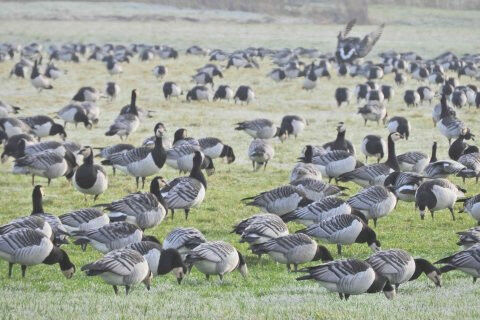
Photo: Gerard Muskens - At the current population sizes, the practice of scaring geese off pastures in the province of Friesland probably ends up costing more than it saves. Utrecht University ecologist Monique de Jager and colleagues from Wageningen University and Research, the University of Amsterdam, and the Netherlands Institute of Ecology (NIOO-KNAW) conclude this based on a model study , that was conducted as part of the Dutch contribution to European goose management. The results suggest that scaring geese is cost-effective only when there are few geese in the area. Conflict between farmers and geese. For a long time, geese in Europe did not fare well, but with the implementation of protective measures in 1950, their populations have rebounded. While this stands as a success story for nature conservation, there is a downside: the increased goose numbers means farmers experience reduced yields as geese consume grass that cannot be harvested. Barnacle geese, in particular, cause agricultural damage as their small beaks allow them to graze the grass shorter than other goose species, which hinders the recovery of the grass.
TO READ THIS ARTICLE, CREATE YOUR ACCOUNT
And extend your reading, free of charge and with no commitment.