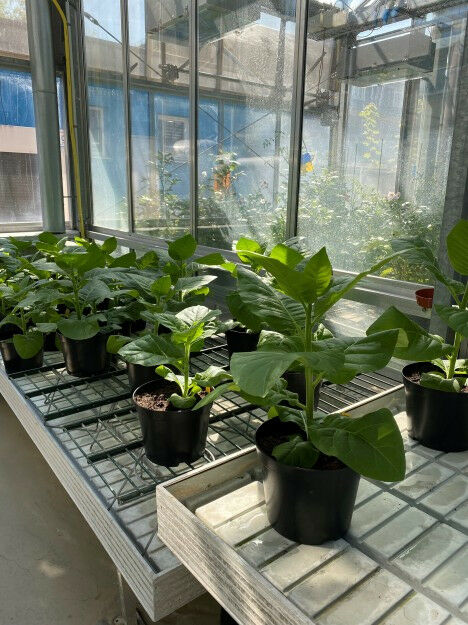
 The tobacco plants were cultivated in the greenhouse for the tests
Plant biotechnologists elucidate the mechanism that leads to higher seed yields in tobacco plants by transporting fatty acids - in addition to sugar - via the nutrient-carrying transport vessels. The tobacco plants were cultivated in the greenhouse for the tests © Uni MS - Antje von Schaewen When there is drought, a pathogen attack, or too much salt in the soil, plants are faced with a constant series of stress factors. Plant biotechnologists study how plants cope under such circumstances, meaning, which molecular mechanisms may increase stress tolerance and, thus, how plant defence responses can be improved. A team under Prof. Antje von Schaewen at the University of Münster has been investigating genetically modified tobacco plants that produce more biomass under stressful conditions compared to non-modified relatives. The researchers followed up on the question, which molecular mechanism(s) may play a role for their findings. They could show that a subtle change in carbohydrate metabolism (resulting from enzyme replacement) causes the transgenic plants to transport more fatty acids from the leaves to the inflorescences and seeds, thus compensating for ten per cent less sugar transport. The study, which also involved scientists from the University of Göttingen and the University of Ferrara (Italy), was recently published in the highly respected " Plant Journal ".
TO READ THIS ARTICLE, CREATE YOUR ACCOUNT
And extend your reading, free of charge and with no commitment.
Your Benefits
- Access to all content
- Receive newsmails for news and jobs
- Post ads